

In today’s hyper-fragmented B2B landscape, a shocking statistic emerges: modern B2B buyers require an average of 62.4 interactions across 3.5 different channels before making a purchase decision. Even more alarming, 79% of marketing leads never convert without proper nurturing. This isn’t just a minor sales hiccup—it’s a fundamental shift in how decisions are made, with 80% of B2B interactions now happening digitally.
Enter HubSpot multichannel lead nurturing, the systematic approach that’s changing the conversion equation. Companies implementing these integrated workflows report 50% more sales-ready leads at 33% lower acquisition costs. The data makes a compelling case: marketing automation within HubSpot’s ecosystem delivers a staggering 451% increase in qualified leads while slashing campaign launch times by over two-thirds.
For B2B marketers facing increasingly complex digital-first buying journeys, the ability to coordinate personalized touchpoints across email, social, webinars and other channels has shifted from nice-to-have to business-critical.
Contents
- 1 Key Takeaways
- 2 The Critical Role of Multichannel Nurturing in Modern B2B Sales
- 3 HubSpot’s 2025 Multichannel Features Accelerating Conversions
- 4 Measurable ROI of HubSpot’s Multichannel Approach
- 5 Overcoming Multichannel Challenges with HubSpot
- 6 Future-Proofing B2B Strategies: HubSpot’s 2025 Roadmap
- 7 FAQ
- 7.1 What makes HubSpot’s multichannel approach different from using separate tools?
- 7.2 How long does it typically take to see ROI from HubSpot multichannel nurturing?
- 7.3 Which channels perform best for complex B2B products with long sales cycles?
- 7.4 Can HubSpot’s multichannel workflows integrate with our existing sales process?
- 8 Sources
Key Takeaways
- Conversion complexity has increased with B2B buyers requiring 62.4 interactions across multiple channels
- Companies using HubSpot’s multichannel approach achieve 50% more sales-ready leads at reduced costs
- Automated workflows with personalized touchpoints across email, social and other channels drive higher engagement
- AI-powered features like Breeze AI Agents and predictive scoring boost conversion rates by 90%
- Organizations using Marketing Hub for 3+ years see 505% ROI and significantly larger purchase values
The Critical Role of Multichannel Nurturing in Modern B2B Sales
The B2B buying journey has fundamentally changed. With buyers requiring over 60 interactions before conversion and nearly 80% of leads withering without proper nurturing, single-channel approaches simply don’t cut it anymore. This digital transformation demands a coordinated strategy that meets prospects where they are—whether opening emails, engaging on LinkedIn, or attending virtual events.
The Multichannel Mandate
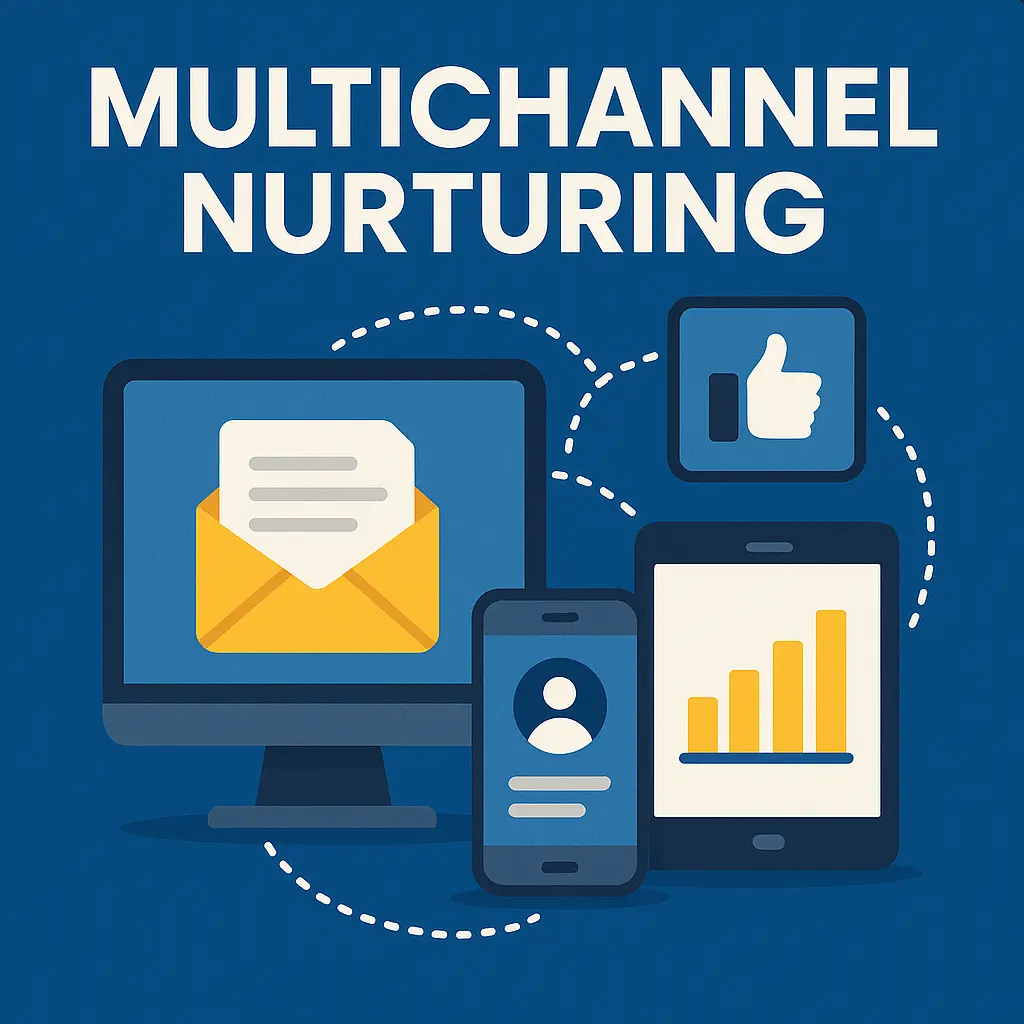
Today’s B2B decision-makers bounce between channels during their buying journey. They might discover your brand through a LinkedIn post, download a whitepaper, attend a webinar, and still need several personalized emails before booking a demo. This cross-channel behavior means marketers must maintain consistent presence and messaging across all touchpoints.
HubSpot’s platform addresses this challenge by centralizing behavioral data from various channels, creating a unified view of each prospect’s journey. This integration allows for automated personalization that feels natural rather than robotic, with timing and messaging adjusted based on prospect behavior.
The Automation Advantage
Marketing teams implementing HubSpot’s automation tools see dramatic improvements in lead quality and quantity. The 451% increase in qualified leads isn’t just about volume—it represents better matching between prospect needs and your solutions. By reducing campaign launch time by 68%, teams can be more responsive to market changes and test new approaches without exhausting resources.
This efficiency extends to how leads move through your pipeline. With proper nurturing workflows, prospects receive information tailored to their specific stage and interests, creating a more natural progression toward purchase readiness.
HubSpot’s 2025 Multichannel Features Accelerating Conversions
AI-Powered Campaign Orchestration
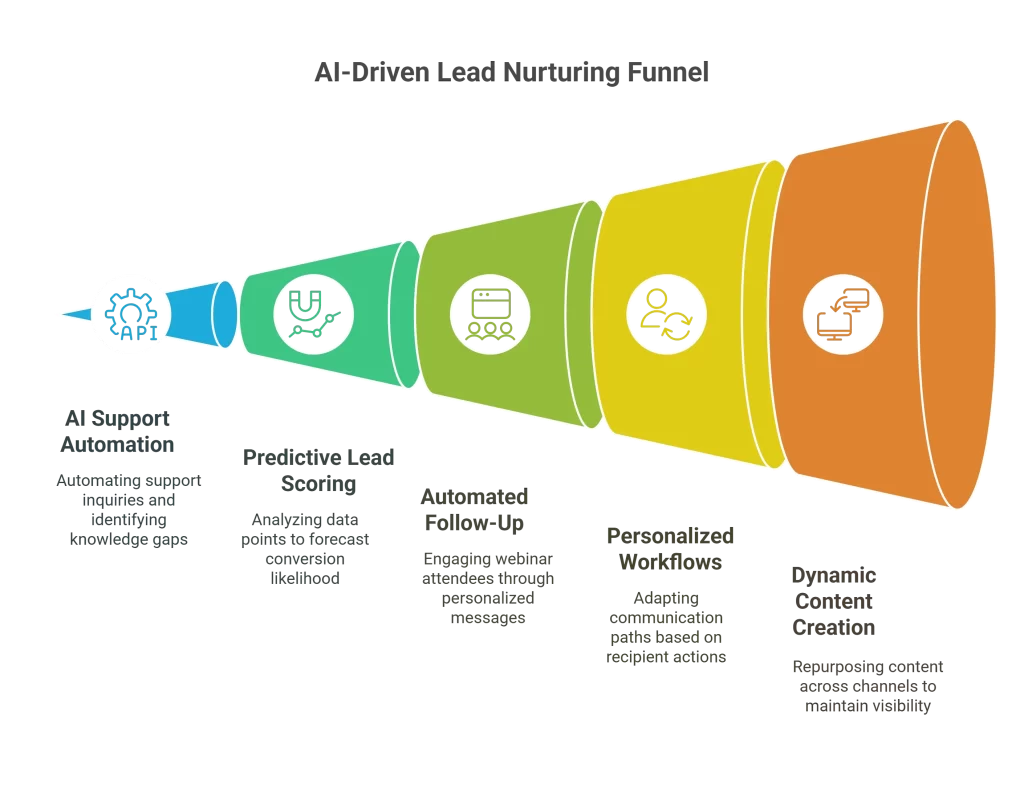
HubSpot’s recent innovations have transformed how B2B marketers orchestrate complex campaigns across channels. The introduction of Breeze AI Agents represents a significant leap in automation capabilities, handling 50% of support inquiries automatically while identifying knowledge gaps that can inform future content creation.
Predictive lead scoring now analyzes over 1,000 data points to forecast conversion likelihood with 90% accuracy. This goes far beyond traditional scoring models by incorporating not just engagement metrics but also contextual signals like content topic preferences and industry-specific behaviors.
The Spring 2025 Spotlight release introduced AI agents that can automatically follow up with webinar attendees through both LinkedIn messages and SMS based on their engagement level during the event. This cross-channel coordination has reduced manual tasks by 40% while maintaining personalization that feels authentic to recipients.
Automated Workflow Optimization
Research consistently shows that leads require a minimum of 10 nurturing touches before conversion—a challenge perfectly suited to HubSpot’s branched email and SMS sequences. These workflows can adapt based on recipient actions, creating personalized paths rather than one-size-fits-all campaigns.
The 5-minute response window represents a critical opportunity that HubSpot helps capture. When prospects visit pricing pages or high-intent sections of your website, the platform can trigger immediate SMS or WhatsApp alerts to sales teams, enabling them to reach out while interest is at its peak—when contacts are 21 times more likely to engage.
Dynamic content libraries solve one of the biggest challenges in multichannel marketing: content creation. By repurposing webinar recordings into blog posts, email snippets, and social media clips, teams can maintain visibility across all required channels without multiplying their production efforts.
A fascinating insight from Huble’s research shows that workflows incorporating score decay—where engagement points reduce by 50% monthly without new interactions—automatically filter out inactive prospects, improving overall lead quality metrics and focusing resources where they matter most.
Measurable ROI of HubSpot’s Multichannel Approach
The financial impact of implementing HubSpot’s multichannel nurturing strategy is compelling. Organizations using Marketing Hub for three or more years report a remarkable 505% return on investment, driven by a 129% increase in inbound leads and 50% higher deal closure rates.
Financial Performance Metrics
Beyond lead generation improvements, the economic benefits extend to purchase values. Properly nurtured leads make purchases that are 47% larger than their non-nurtured counterparts, while simultaneously reducing acquisition costs by 26%. This dual impact on both the revenue and expense sides of the equation creates a powerful financial case for investment.
IDC’s analysis found that companies typically recover their HubSpot implementation costs within just four months through automated LinkedIn and email nurturing programs. This quick time-to-value makes the platform particularly attractive for organizations seeking rapid ROI from their marketing technology investments.
Sales and Marketing Alignment
Perhaps one of the most valuable yet often overlooked benefits is improved alignment between sales and marketing teams. Shared CRM data cuts lead handoff time by 73%—a critical improvement considering that 49% of organizations report their teams previously operated in isolated silos.
This alignment becomes even more important as buying processes evolve. Forrester’s research indicates that 50% of $1M+ deals now close through self-serve sales funnels, enabled by HubSpot’s integrated knowledge bases and automated qualification processes. The platform ensures that whether a prospect prefers high-touch or self-directed purchasing, they receive consistent information and support.

Overcoming Multichannel Challenges with HubSpot
Successfully executing multichannel lead nurturing comes with significant challenges that HubSpot’s platform helps address through innovative solutions and best practices.
Content Scalability Solutions
Creating enough quality content to feed multiple channels is one of the biggest hurdles for marketing teams. HubSpot’s approach enables marketers to repurpose a single webinar into twelve or more distinct assets—blogs, checklists, demo videos, email sequences, and social posts. This content multiplication strategy ensures consistent messaging while maximizing the return on content creation investments.
The platform’s templating capabilities and content reuse features make it possible to maintain high-quality engagement across channels without proportionally increasing content production demands. Teams can focus on creating fewer, higher-quality cornerstone pieces that then feed multiple touchpoints.
Consistency Across Channels
Maintaining consistent messaging becomes exponentially more difficult as you add channels and market segments. HubSpot’s Content Hub allows teams to align messaging across up to 14 different languages while ensuring brand coherence across all customer touchpoints.
Data from 6minded demonstrates that HubSpot users achieve email conversion rates of 2.4% through AI-optimized send times that account for recipient behavior patterns. Similarly, dynamic CTAs that adjust based on lead score boost click-through rates by 17%, showing how personalization across channels drives measurable engagement improvements.
Technology Integration
For companies with existing martech investments, HubSpot’s native connections to Salesforce and extensive Marketplace app ecosystem help unify lead scoring data and create a complete view of the customer journey across platforms. This integration capability is particularly valuable for organizations using CRM-driven revenue strategies that depend on consistent data across systems.
Rather than requiring a complete platform switch, HubSpot can enhance existing systems, making it a practical choice for organizations with significant investments in complementary technologies.
Future-Proofing B2B Strategies: HubSpot’s 2025 Roadmap
Looking ahead, HubSpot’s development roadmap addresses emerging trends that will shape B2B marketing effectiveness in coming years. These forward-looking capabilities help organizations prepare for shifting buyer preferences and competitive dynamics.
Evolving Buyer Demographics
With 58% of B2B buyers now under 35, HubSpot’s integration of WhatsApp and Instagram automation recognizes the changing demographics of decision-makers. These younger buyers bring consumer-like expectations to B2B purchases, preferring messaging apps and visual platforms over traditional email communications.
HubSpot’s multi-channel capabilities ensure organizations can reach these Gen Z and Millennial buyers through their preferred channels without creating disconnected experiences or requiring separate systems for different demographic targets.
Self-Service and AI Acceleration
The platform’s customizable self-serve deal rooms reduce sales cycles by 22% by providing prospects with all relevant information in a controlled environment they can navigate at their own pace. This capability aligns perfectly with the growing preference for self-directed research among B2B buyers.
HubSpot’s Help Desk Workspace demonstrates how AI can enhance the customer experience by reducing ticket resolution time by 40% through automatically generated knowledge articles. This improvement is critical as research shows 50% of B2B buyers now expect instant solutions to their questions and concerns.
Machine learning capabilities now forecast quarterly pipeline growth with remarkable 5% accuracy, giving marketing and sales leaders the predictive insights needed to make proactive resource allocation decisions rather than reacting to already-emerging trends.
The shift toward omnichannel lead generation strategies has become a competitive necessity rather than a nice-to-have, and HubSpot’s platform evolution ensures organizations can adapt to these changing expectations without building custom solutions from scratch.
FAQ
What makes HubSpot’s multichannel approach different from using separate tools?
HubSpot’s integrated platform shares data across all channels automatically, creating a unified view of each prospect’s journey. This eliminates the data silos that occur with separate tools, enabling truly personalized experiences based on complete behavior data rather than channel-specific interactions.
How long does it typically take to see ROI from HubSpot multichannel nurturing?
Most organizations see initial results within 60-90 days, with full ROI typically achieved within 4 months according to IDC’s analysis. Companies that implement both automated workflows and lead scoring tend to see faster returns than those using only basic features.
Which channels perform best for complex B2B products with long sales cycles?
For complex products, research shows email combined with targeted webinars and LinkedIn outreach yields the strongest results. HubSpot’s data indicates that adding personalized video content to these channels can increase engagement rates by up to 37% for technical or high-consideration purchases.
Can HubSpot’s multichannel workflows integrate with our existing sales process?
Yes, HubSpot offers bi-directional integrations with major CRM platforms and custom API connections for proprietary systems. The platform can trigger notifications in external tools, receive data from other systems, and synchronize lead status across your entire tech stack.
Sources
- TechJury – 30 Lead Nurturing Statistics
- Headley Media – 9 B2B Lead Nurturing Strategies
- INSIDEA – HubSpot for B2B Success
- Autobound – Multi-Channel Campaign Builders
- HubSpot – Spring 2025 Spotlight
- SalesHive – HubSpot vs. Salesforce
- 6minded – HubSpot Marketing Statistics
- Hublead – HubSpot Lead Nurturing
- Forrester – 2025 B2B Predictions
- Susanna Reay – Client Touchpoints
- Huble – HubSpot Workflows
- Huntscape Ops – HubSpot Lead Scoring
- Huble – HubSpot ROI Study


