

As of June 2026, cold email reply rates in cold email campaigns often collapse after the first two weeks because domain reputation decays, engagement drops, and inbox algorithms shift later messages to spam. The decline is rarely about fatigue alone. It reflects compounding technical drift, volume mismanagement, and weakening targeting as teams exhaust their strongest segments. This guide shows how to diagnose the drop and stabilize reply rates through throttling, sequencing, and continuous reputation monitoring.
Why cold email Campaigns Lose Traction After Week 2
Quick Answer: Mailbox reputation degrades when teams send too fast, turn off warmup, or pile on new domains without proper setup. Engagement falls as later sequence steps reach looser segments, triggering spam filters and complaint thresholds that tank inbox placement and kill replies.
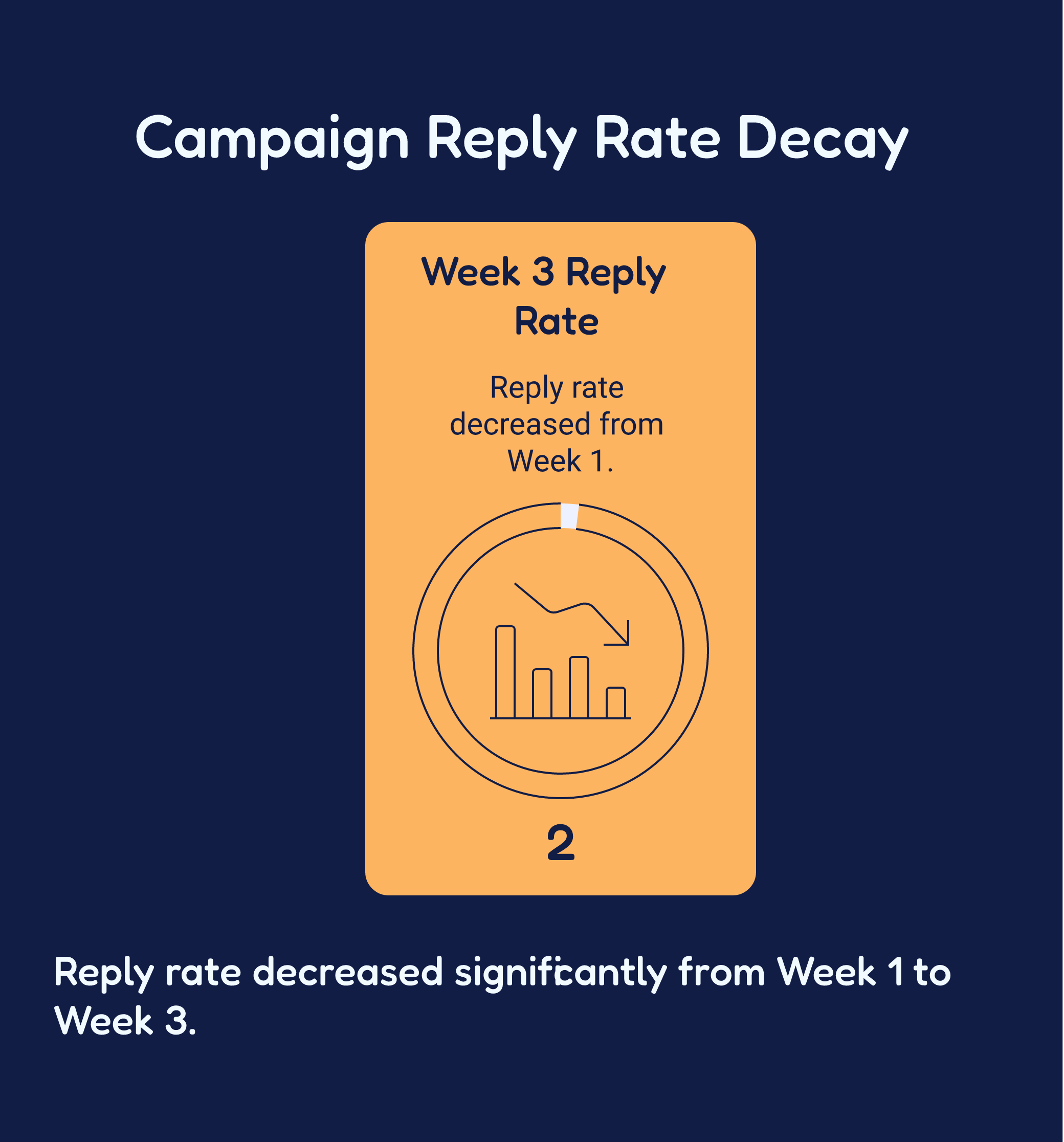
A campaign that opens at 45% and converts 8% replies in week 1 can drop to 25% opens and 2% replies by week 3. The shift happens when Gmail or Outlook reclassifies subsequent touches as bulk mail due to rising bounces and low interaction rates. Complaint rates crossing 0.5% force cold email to throttle sending, and recovery takes weeks to months.
Average B2B cold email open rates fell to 27.7% in 2026, with reply rates at 3.43%. After Google’s 2025 bulk-sender rules, platforms like Smartlead and Instantly saw sharply lower inbox placement for accounts that skipped active list hygiene and reputation maintenance.
Turning warmup off after week 1 to save send volume, then pushing two new domains hard in week 3, crashes health scores. Smartlead’s warmup engine balances 15-20 warmup emails per inbox per day alongside cold sends. Disabling it removes the positive signals providers need to sustain inbox placement.
Takeaway: Reputation decay, not list exhaustion, drives most week-2 collapses in cold email campaigns.
Volume and Throttling Limits That Protect Deliverability
Quick Answer: Staying at 30-50 cold emails per inbox daily protects reputation and sustains inbox placement. Exceeding that band raises complaint rates, triggers auto-throttling, and shifts later sequence steps to spam, making replies evaporate even when copy and targeting remain strong.
Smartlead benchmarks show the safest band as 30-50 cold emails per mailbox per day, yielding an average 5.7% reply rate. Teams that ramp from 20 to 90 emails by week 3 cross the 0.5% complaint threshold, prompting Smartlead to pause or slow sending.
It looks like a sudden collapse when in fact the system is protecting the account from blocklisting. The safest fix is to keep volume steady and scale by adding mailboxes rather than pushing one inbox harder.
Complaint management is binary: once a provider sees frequent spam reports, every future message is scrutinized. Recovery requires lowering volume, refreshing list hygiene, and waiting for positive engagement signals to rebuild trust.
Sequencing, Follow-Up Timing, and List Fatigue
Quick Answer: The first follow-up boosts response by 50%, with optimal spacing around 3 days. Sequences longer than five touches rarely add value and instead burn engagement, especially when each step repeats the same pitch to prospects who already ignored earlier messages.
Data from 2025 shows the first follow-up increases response by ~50%, but diminishing returns appear after four or five touches. A seven-step cold email sequence over 21 days sees strong engagement on steps 1-3, then near-zero replies from steps 5-7 because the cadence is too dense and no new value is added.
Later steps also reach prospects who have already opened but not responded. Repeating the same angle triggers annoyance and spam flags. Shortening sequences to four or five touches over 10-14 days prevents fatigue and keeps reply rates stable longer.
Sending follow-ups on Tuesday or Thursday mornings, or testing evening windows (8-11 pm local time), helps maintain visibility. Evening sends in some studies generated up to 6.52% reply rates. Off-hour batching in later steps often buries messages against inbox clutter.
Stopping the Collapse with Monitoring and Testing
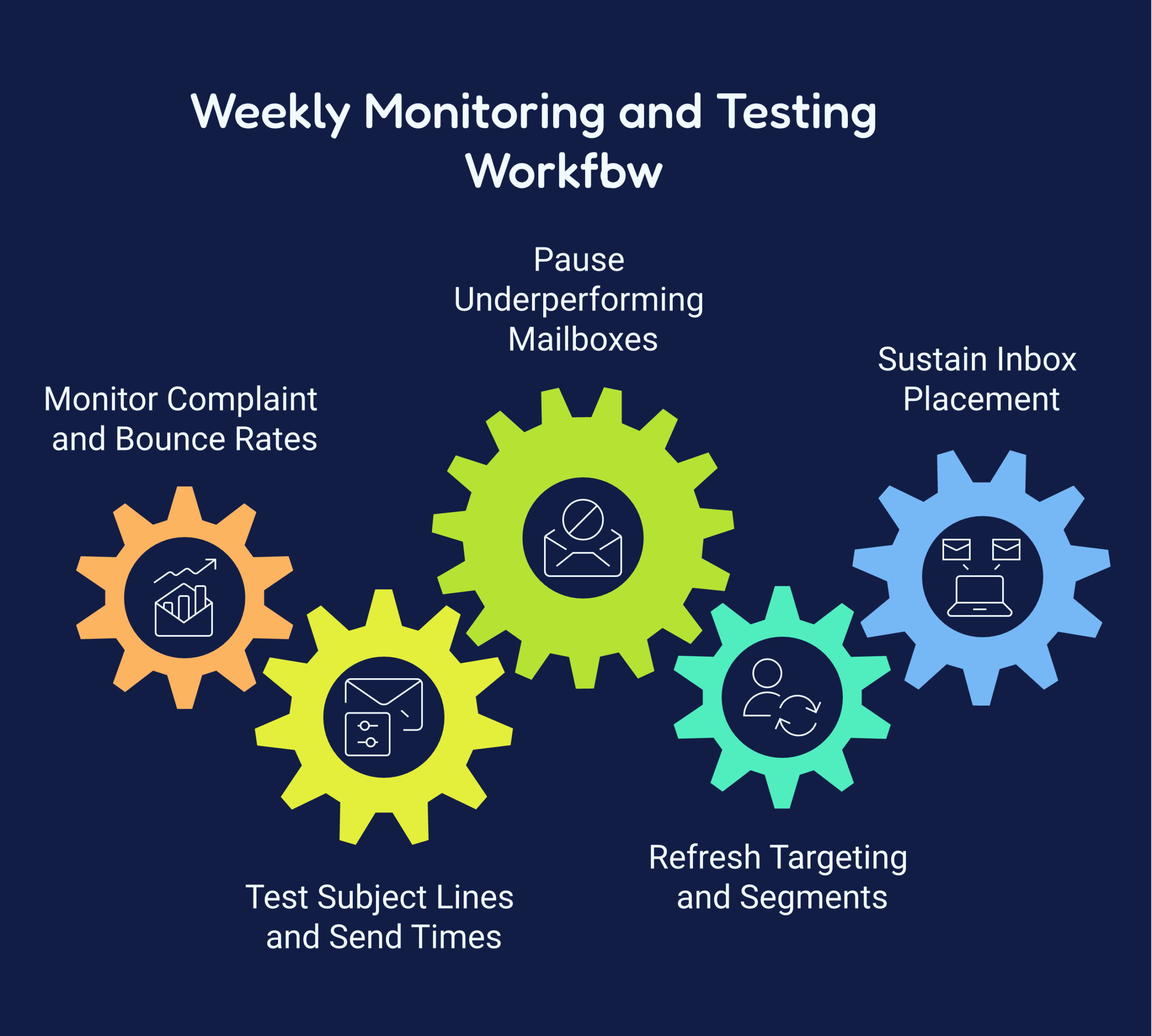
Quick Answer: Maintain continuous warmup, monitor complaint and bounce rates daily, and test subject lines and send times in every variant. Pause underperforming mailboxes early and refresh targeting after week 2 to sustain inbox placement and engagement through multi-week campaigns.
Smartlead’s unified inbox and reputation dashboards let teams track open, reply, bounce, and complaint trends in near real time. Setting an automatic rule to shift traffic when a variant’s reply rate falls 30% below baseline after 300 sends keeps the sequence evolving instead of decaying into ignored templates.
Segmented personalization based on ICP, company size, and pain points now outperforms heavy one-to-one customization. Generic cold email templates average ~8.5% response rates, while AI-assisted, targeted outreach typically delivers 15-25% better open rates when combined with good targeting and deliverability.
For teams that understand Kaltakquise or Warmakquise, focusing cold email resources on the best-fit segments and testing each step holds reply rates steady longer than scaling volume indiscriminately.
- Keep sending at 30-50 emails per inbox per day across all weeks.
- Run warmup continuously; never turn it off once campaigns launch.
- Shorten sequences to four or five touches over 10-14 days.
- Test subject lines, send times, and messaging by variant.
- Monitor complaint and bounce rates daily; pause problem mailboxes immediately.
- Refresh targeting and segment messaging after exhausting top-tier ICP lists.
Takeaway: Systematic testing and throttling prevent week-2 collapse more reliably than perfect copy alone.
FAQ
Why do cold email reply rates drop after week 2?
Mailbox reputation decays, engagement drops, and algorithms shift messages to Promotions or spam. Without maintaining warmup, list hygiene, and relevance, even strong campaigns can face declining inbox placement and engagement curves over multi-week sequences.
How can I fix dropping reply rates in cold email?
Maintain consistent domain warmup, limit to 30-50 emails per inbox daily, monitor complaints, and refresh targeting and content after week 2. Adjust timing, use segmented messaging, and test new subject lines to help stabilize inbox placement and sustain positive engagement trends across campaigns.
Should I keep cold email warmup running during campaigns?
Yes. Disabling warmup once campaigns start damages reputation and deliverability. Smartlead’s 15-20 warmup emails per day per inbox help maintain positive signals with providers. Continuous warmup ensures stable inbox placement, especially in week 3 when new domains and sequences often face scrutiny.
Sources
- Martal – B2B Cold Email Statistics 2026
- Smartlead – Email Sending Frequency for Cold Email
- Artisan – No Response? Here’s How to Nail Your Cold Email Follow-Up
- Smartlead – AI Cold Email Outreach Tools That Actually Get Responses