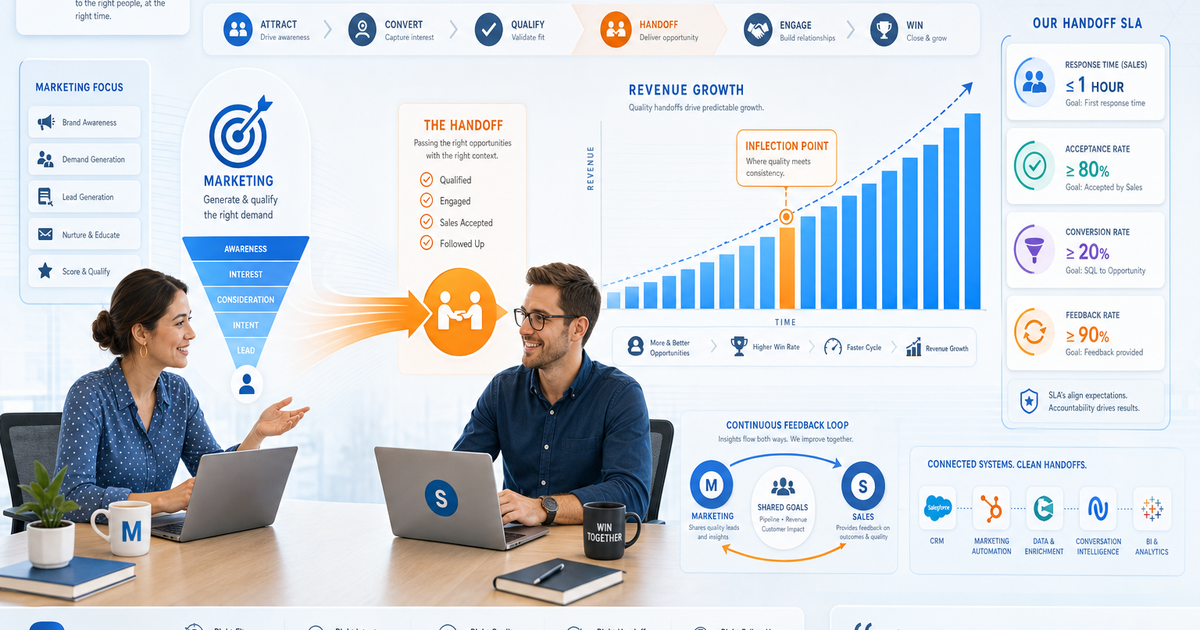
As of June 2026, most B2B revenue leaks happen between MQL and SQL stages, where unclear ownership, weak SLAs, and missing feedback loops allow qualified leads to stall or vanish. Organizations with tight marketing–sales alignment grow revenue 27% faster over three years than misaligned peers. This guide defines how to plug the leak with clear MQL SQL ownership SLA frameworks, response-time commitments, and closed-loop reporting that turn handoffs into predictable pipeline.
Contents
- 1 Assigning MQL and SQL Ownership Across the Funnel
- 2 Building Response-Time and Follow-Up SLAs That Convert
- 3 Feedback Loops That Sharpen Qualification and Messaging
- 4 FAQ
- 4.1 What causes the biggest revenue leaks between MQL and SQL stages?
- 4.2 How can defining MQL and SQL ownership improve revenue performance?
- 4.3 What should an effective MQL-to-SQL SLA include?
- 4.4 How do feedback loops improve sales-marketing alignment?
- 4.5 Why is lead response time critical to conversion rates?
- 5 Sources
Assigning MQL and SQL Ownership Across the Funnel
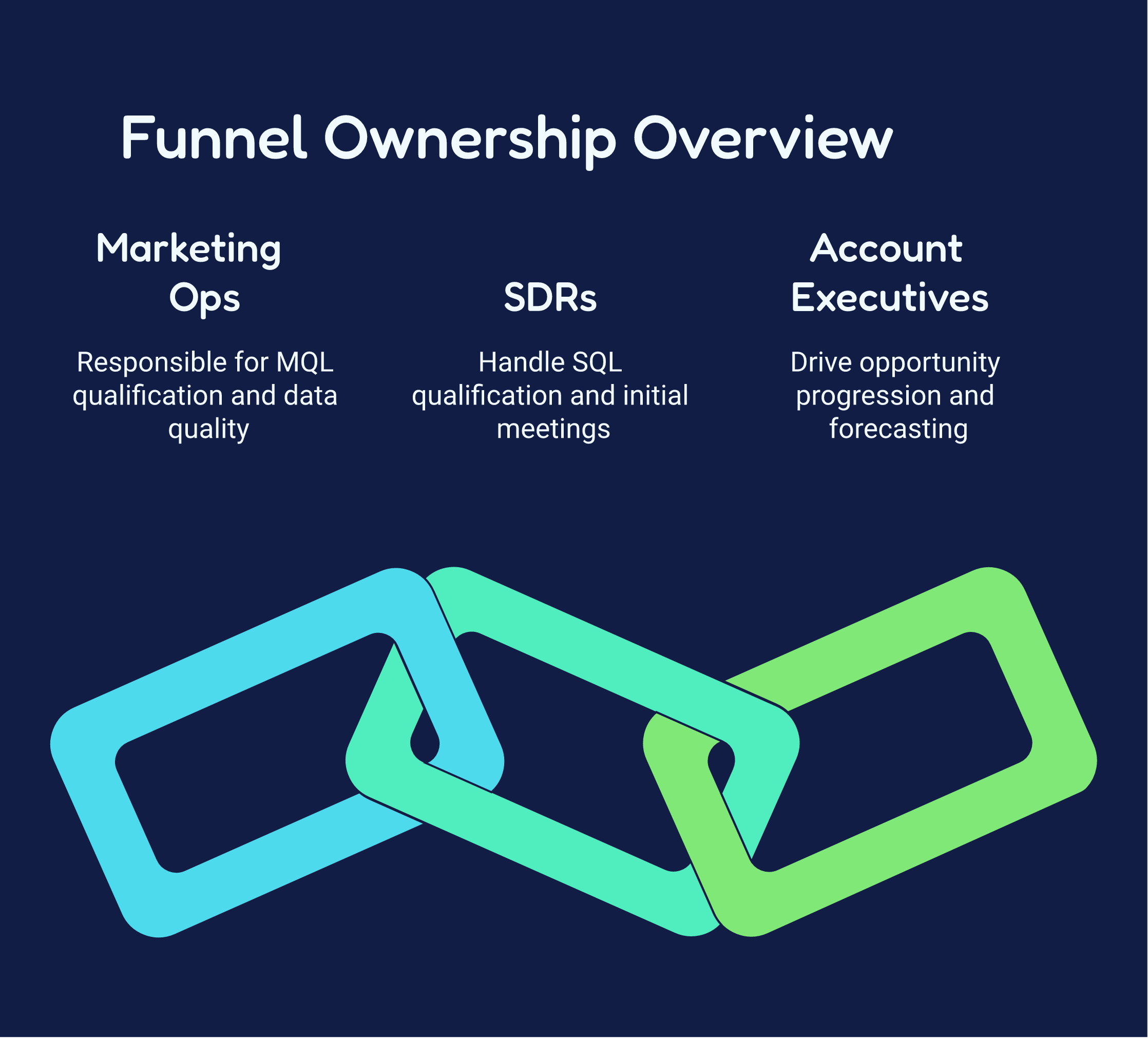
Quick Answer: Assign explicit ownership for MQL qualification to marketing ops, SQL qualification to SDRs, and opportunity progression to account executives. Document who controls data quality, scoring, and follow-up at each stage. Clarity eliminates handoff delays, reduces unworked leads, and builds accountability into every conversion step across the full funnel.
Defining who owns what is the first step. Marketing owns data quality and engagement tracking up to MQL. SDRs own discovery calls and SQL qualification. AEs own opportunity creation and pipeline forecasts. Each team needs explicit criteria for promoting or recycling a lead.
Clear ownership prevents three common failures: leads that sit unclaimed, scoring models no one trusts, and stalled deals with no next step. Teams that document handoff triggers and escalation paths see smoother transitions and faster time-to-contact.
A cybersecurity vendor mapped each stage and assigned one owner per phase. Marketing ops tracked fit and intent signals. SDRs ran first calls and confirmed budget authority. AEs managed deal progression and forecast accuracy. Their handoffs ran on shared CRM status fields and automated alerts.
Takeaway: Ownership without documentation fades; write who does what, when, and what happens if they don’t.
Building Response-Time and Follow-Up SLAs That Convert
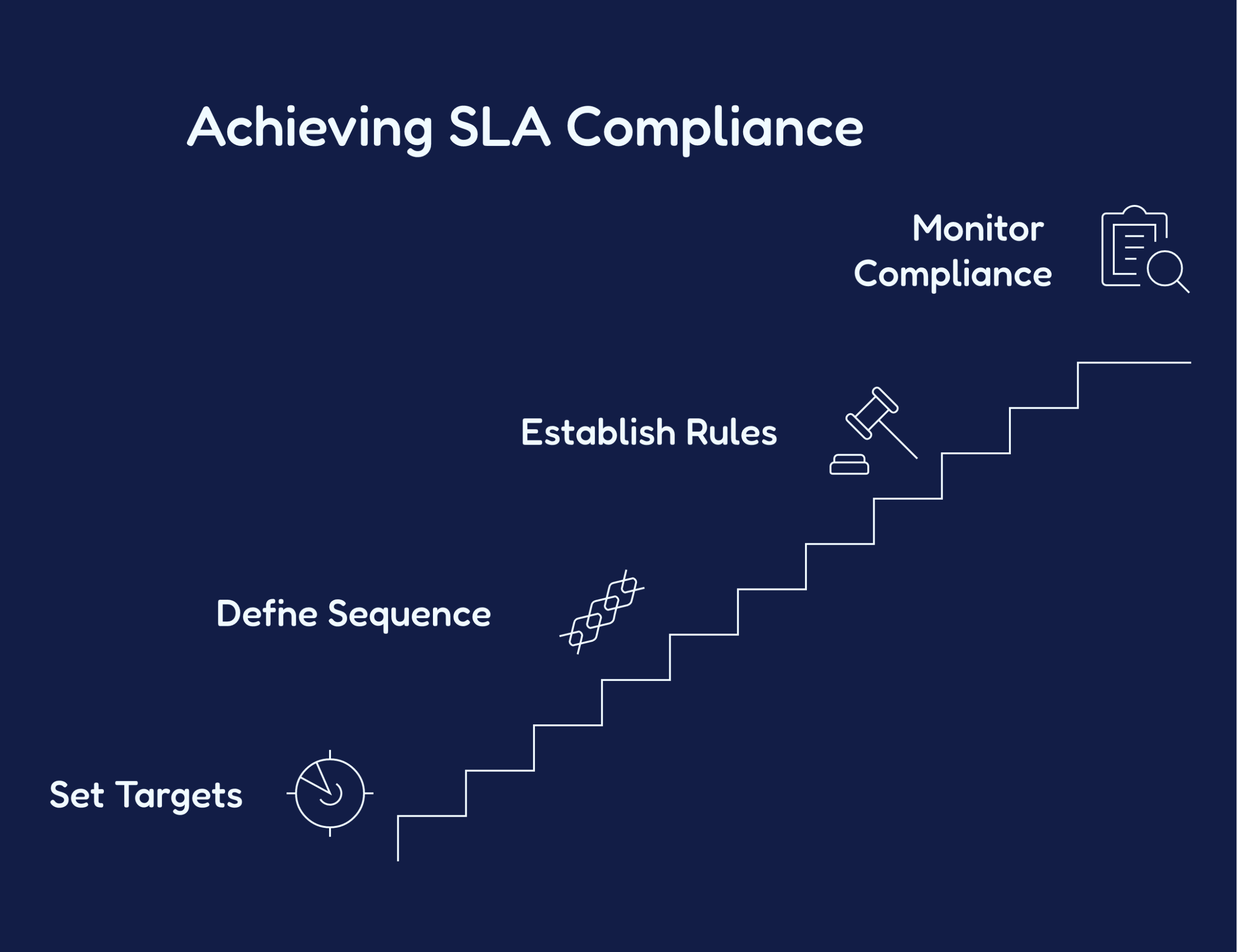
Quick Answer: Set response-time SLAs of 15–60 minutes for high-intent leads and 24 hours for standard SQLs. Define 5–10 follow-up touchpoints across 10 days, with automatic escalation if a lead remains untouched. Speed and persistence together maximize connect rates and prevent warm prospects from going cold before first contact.
Speed matters. Teams that respond to inbound leads within five minutes convert nine times more often than those waiting 30 minutes. But a single fast reply is not enough; consistent follow-up over multiple channels keeps the conversation alive.
A strong SLA covers three commitments:
- Maximum response time by lead type (demo request, pricing view, content download)
- Cadence and channel mix for follow-up attempts
- Escalation rules when SLA breaches occur
A PLG SaaS company set a 30-minute SLA for product-activated leads with pricing-page visits. SDRs worked each lead across seven touchpoints over 10 days. Breach alerts went to the SDR manager and VP Sales. MQL-to-SQL conversion rose from 18% to 27% in two quarters, adding millions in annual pipeline.
Revenue Operations frameworks tie SLA compliance into dashboards and RevOps governance so managers spot patterns and coach teams before leaks compound.
Feedback Loops That Sharpen Qualification and Messaging
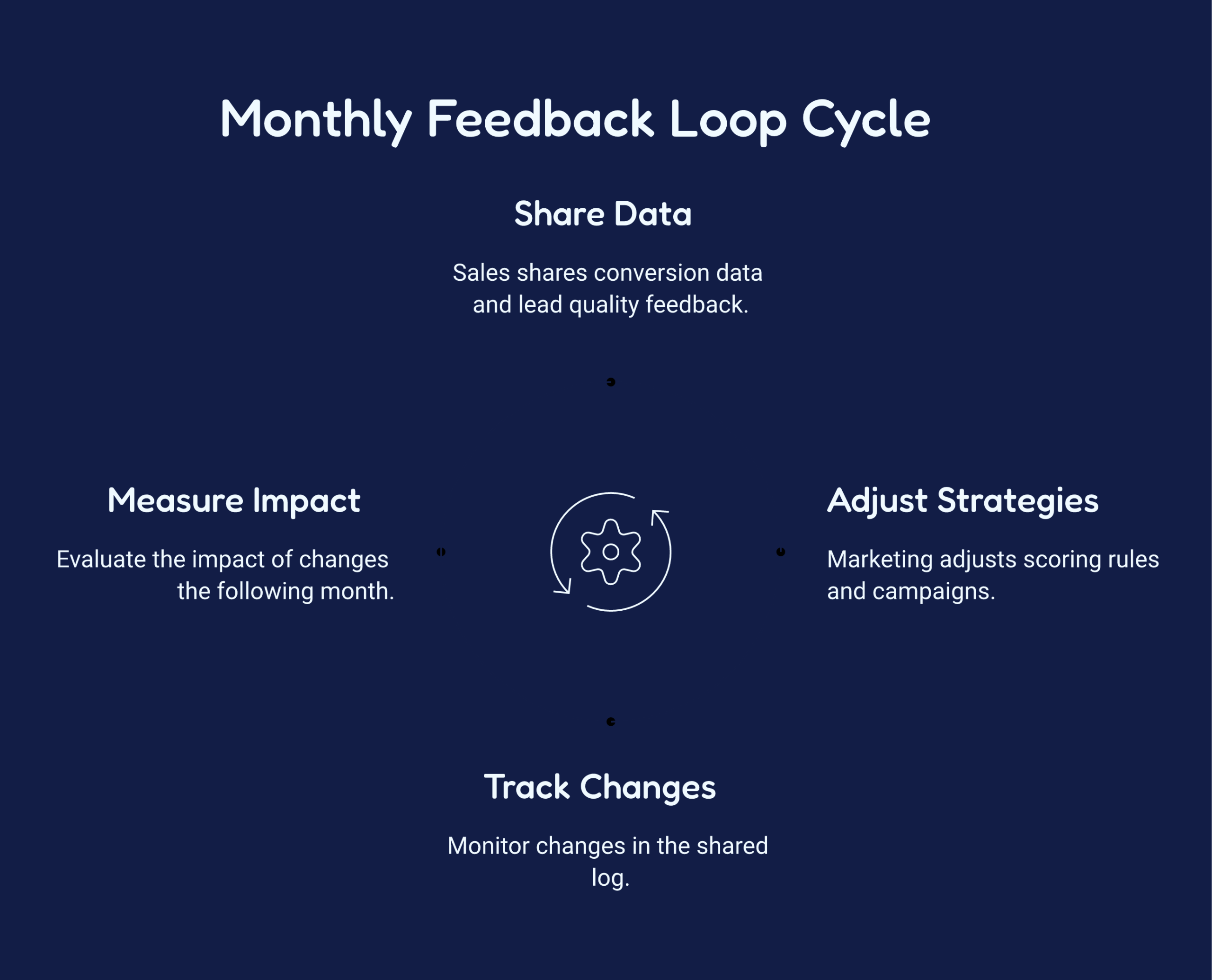
Quick Answer: Run monthly joint reviews where sales shares conversion data and lead-quality feedback while marketing adjusts scoring rules and campaigns. Track changes in a shared log and measure impact the following month. This closed-loop cycle aligns criteria, improves lead quality, and builds trust between functions over time.
Feedback loops turn static SLAs into living systems. Marketing sends leads; sales works them and reports what converts. Marketing refines scoring, messaging, and targeting. The cycle repeats. Firms with effective loops report 70% higher satisfaction than those without.
Structure the loop in four stages: collect conversion and disqualification data, analyze patterns with both teams, adjust scoring or campaigns, and review results next month. Document every change so teams see what improved and why.
A fintech firm held monthly marketing–sales syncs. SDRs flagged leads from certain industries that never had budget. AEs shared won-deal profiles. Marketing tightened firmographic filters and retargeted messaging. Three months later, SQL acceptance rate climbed 12 points.
Takeaway: Feedback without action is noise; log decisions, measure outcomes, and close the loop every cycle.
Ongoing collaboration builds a culture where both teams own revenue, not just their own metrics. Workshop formats help teams design these rhythms from scratch when alignment is weak.
A note from practice: this interplay of strategy and execution is exactly what we build at Jolly Marketer as a Revenue Engine. Positioning, ICP, outbound, inbound, lifecycle and CRM work together as one system. AI-driven personalization plus sales and marketing automation keep the pipeline predictable. For many B2B companies across the DACH region this is the foundation for steady, profitable growth. Teams that would rather not build it in-house can have the Revenue Engine set up turnkey.
FAQ
What causes the biggest revenue leaks between MQL and SQL stages?
Common leaks happen when leads aren’t followed up quickly or ownership is unclear. Missed response-time SLAs, misaligned qualification criteria, and weak feedback loops mean warm leads stall or go cold. Clear definitions, fast responses, and shared metrics sharply reduce this revenue loss and improve conversion speed.
How can defining MQL and SQL ownership improve revenue performance?
Assigning ownership ensures accountability and clarity at each funnel stage. When marketing, SDRs, and sales agree who manages data quality, lead scoring, and follow-ups, handoffs become smoother. This alignment cuts delays, reduces unworked leads, and builds consistent conversion and forecasting accuracy across the full revenue pipeline.
What should an effective MQL-to-SQL SLA include?
A strong SLA defines response times, follow-up cadence, lead escalation, and recycling rules. It specifies who acts when leads meet engagement or intent thresholds. Documenting these expectations creates consistency between teams, ensures timely action, and helps management track compliance through dashboards and recurring performance reviews.
How do feedback loops improve sales-marketing alignment?
Regular feedback loops let teams analyze what lead types convert best, adjust scoring, and align messaging. Monthly reviews where marketing and sales share insights help close data gaps and refine processes. This ongoing collaboration strengthens revenue predictability and promotes a culture of continuous performance improvement.
Why is lead response time critical to conversion rates?
Leads contacted within minutes of showing buying intent are far likelier to convert. Delays reduce engagement and trust while giving competitors time to respond first. Rapid follow-up SLAs and automated routing ensure qualified prospects receive attention immediately, increasing pipeline velocity and overall marketing efficiency.