

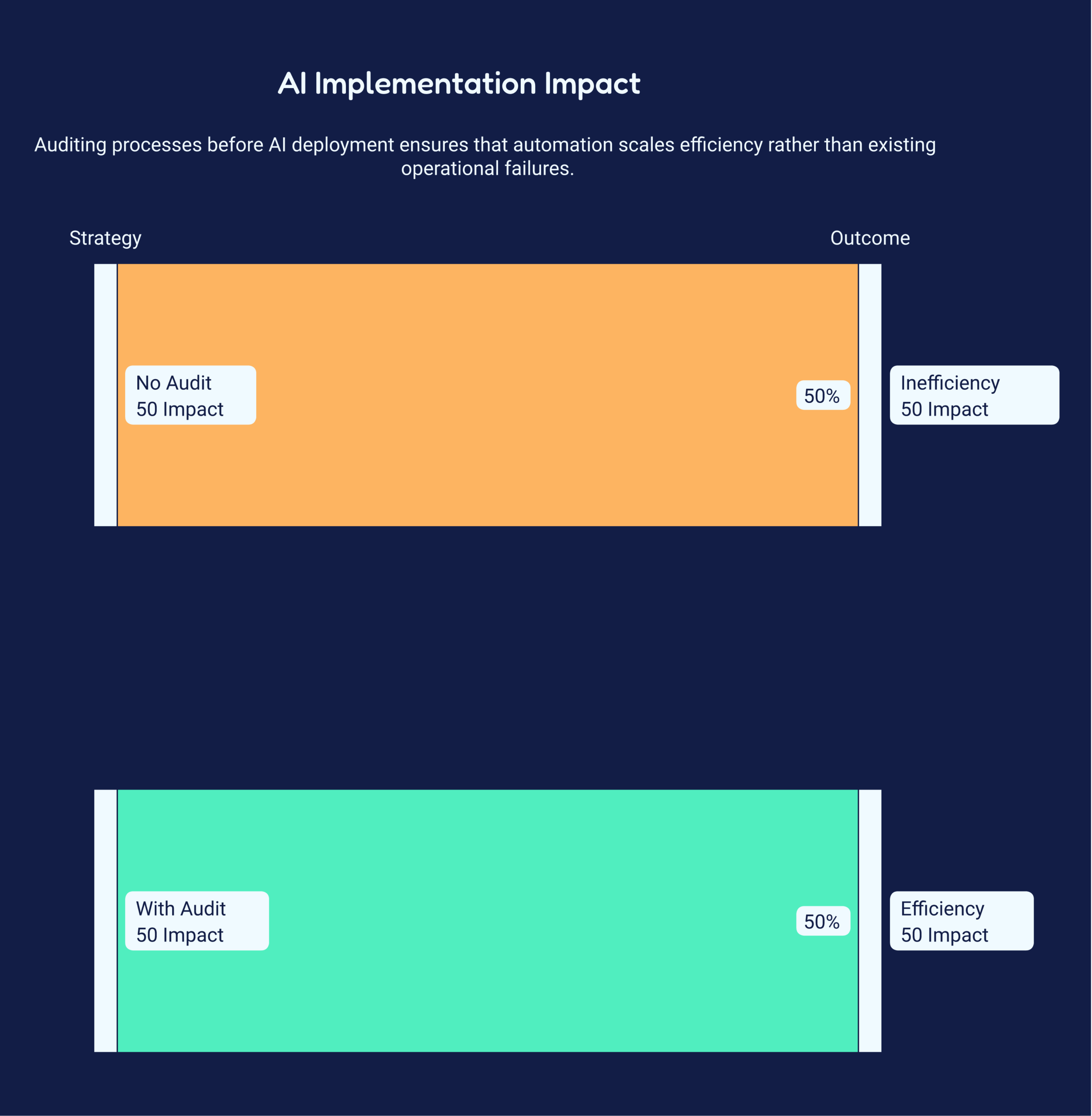
As of June 2026, AI does not repair weak GTM strategy foundation before AI work is complete. It amplifies what already exists, so unclear ICPs, poor CRM hygiene, and inconsistent workflows simply break faster. This guide shows which operational fixes must come first and why that order protects automation investments.
AI amplifies existing inefficiencies instead of fixing them
Quick Answer: AI automates workflows as they stand, which means broken processes run faster but not better. Teams that skip process audits, data cleanup, and goal definition before deploying AI end up executing bad habits at scale, reducing trust and wasting budget on tools that cannot deliver measurable value.
The adoption data behind this: our AI in B2B marketing statistics roundup shows 95% of B2B marketers now use AI applications, while only 30% of CMOs rate their AI readiness as mature.
AI cannot diagnose whether a workflow makes sense. Fullcast’s 2025 guidance confirms that weak foundations turn automation into faster mistakes. When CRM fields are undefined, AI-powered lead routing sends prospects to the wrong rep. When account scoring logic is vague, predictive models surface low-value targets.
The result is faster misrouting, lower rep confidence, and more noise. AI multiplies the output of the system it sits on top of. A pipeline full of duplicates becomes a pipeline full of automated duplicates. Marketing teams see activity volume rise while conversion rates stay flat or decline.
Takeaway: AI creates value only after processes, data, and objectives are stable enough to measure improvement.
Poor data quality sabotages every AI output
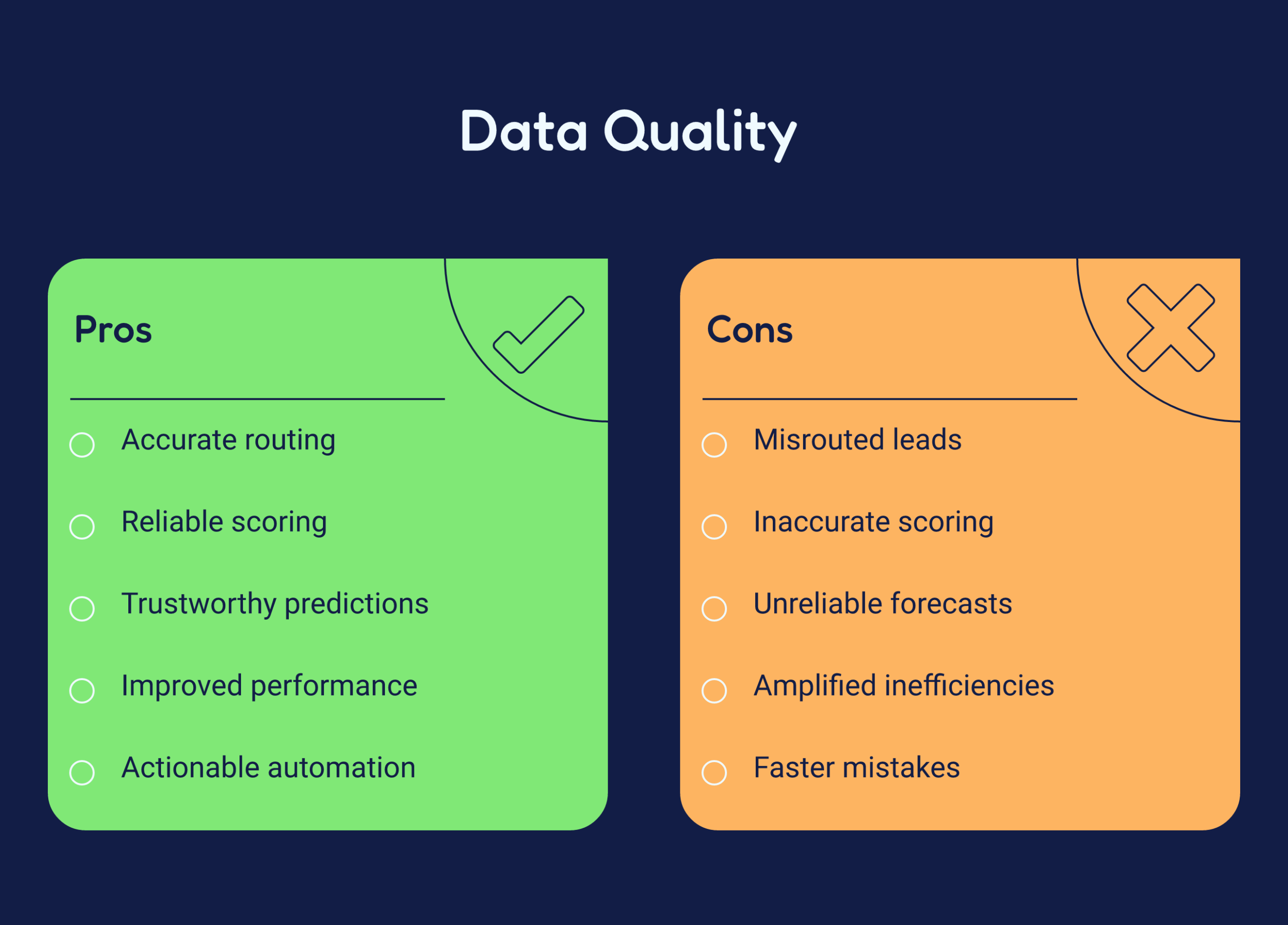
Quick Answer: AI models rely on accurate, timely, and consistent inputs. When CRM records are incomplete, outdated, or inconsistent, automation misroutes leads, misscores accounts, and generates unreliable forecasts. Teams must clean and unify data before expecting AI to improve GTM performance.
A revenue operations team at a B2B SaaS firm launches account prioritization powered by AI. The model is trained on opportunity stages that have not been updated in six months. The tool confidently recommends accounts that closed or churned weeks ago, so reps chase phantom deals.
Integrate’s 2025 analysis stresses that AI implementation works best when systems are connected and field definitions are enforced. Siloed data means AI outputs conflict across tools. Incomplete records mean scoring logic has no signal to act on.
- Define mandatory fields and enforce them at the CRM level.
- Standardize lifecycle stages and handoff criteria across sales and marketing.
- Audit integrations to confirm data flows in both directions.
- Remove duplicate records before automating routing or scoring.
Fixing these gaps first ensures AI recommendations are grounded in reality. Bad data turns AI outputs into noise, which drives more confusion instead of operational efficiency.
Workflow clarity enables automation that people actually adopt
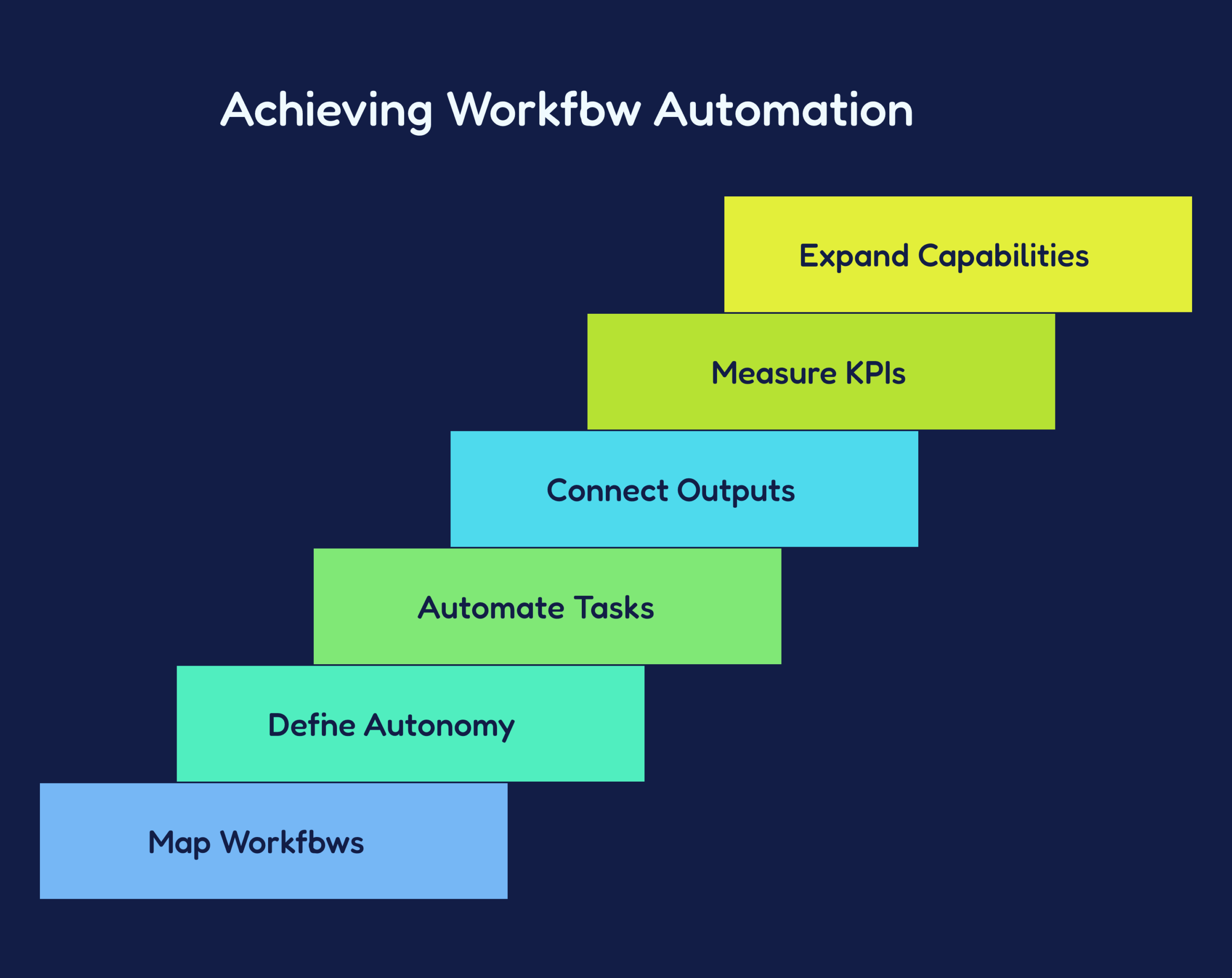
Quick Answer: Automation fails when teams do not understand how AI fits their daily work. Starting with an operational assessment identifies friction points and defines where autonomy helps and where human judgment still drives decisions. This clarity drives adoption and measurable impact.
The strongest AI implementations target high-friction, low-complexity tasks first. Highspot’s 2025 guidance recommends mapping workflows before buying tools. A phased rollout allows quick validation and adjustment before expanding.
Instead of launching an autonomous sales agent across the entire funnel, a team automates one repetitive handoff. Lead-to-account matching runs in the background, saving reps 30 minutes a day. The team measures adoption, refines routing logic, then adds predictive account prioritization only after the first use case meets its KPI target.
This sequence reduces risk, proves value early, and builds trust. Teams that skip workflow mapping deploy AI everywhere at once, overwhelm reps with alerts, and see adoption collapse within weeks. Integrating revenue operations best practices ensures automation aligns with strategic planning and sales alignment goals from the start.
Takeaway: Workflow clarity turns AI from a distraction into a force multiplier that reps choose to use.
Revenue-linked KPIs reveal whether AI actually drives growth
Quick Answer: Measuring AI success by activity volume is misleading. Revenue-centric KPIs such as conversion rates, sales cycle velocity, quota attainment, and pipeline quality show whether automation drives real business outcomes. Defining these metrics before deploying AI ensures teams optimize for growth, not just output.
A marketing team tracks “AI-generated emails sent” and celebrates a 40% rise in volume. Pipeline quality does not improve. Switching to conversion and velocity metrics reveals that faster outreach is not translating into more qualified meetings or shorter deal cycles.
The fix is to define success before launch. Vague goals like “be more efficient” waste budget and create false confidence. Specific outcomes tied to performance metrics, such as improving lead-to-opportunity conversion by 10% or reducing time-to-first-meeting by two days, make it clear whether AI is worth scaling.
- Track conversion rates at every funnel stage.
- Measure sales cycle length and velocity improvements.
- Monitor quota attainment and compare AI-assisted deals to manual workflows.
- Link automation to pipeline value, not just activity count.
This focus on revenue impact separates technology adoption from real business fundamentals. AI that does not move the needle gets adjusted or retired before it wastes more time.
FAQ
Why doesn’t AI fix a broken GTM strategy?
AI automates what already exists, so if data, processes, or goals are unclear, it simply amplifies those weaknesses. Teams end up executing bad workflows faster instead of better. Before adding AI, leaders must fix foundational issues like CRM hygiene, workflow clarity, and goal alignment.
What happens when AI runs on poor CRM data?
AI relies on accurate, consistent inputs. When CRM data is messy or outdated, automation misroutes leads, mis-scores accounts, and creates unreliable forecasts. Poor data quality turns AI outputs into noise, causing more confusion and wasted effort instead of meaningful performance improvement.
How should teams prepare before adding AI to GTM?
Teams should first audit processes, clean and unify data, and define revenue-linked KPIs. This creates a foundation where AI can add measurable value. Launching AI without this groundwork simply magnifies inefficiencies and drives low trust among sales, marketing, and operations teams.