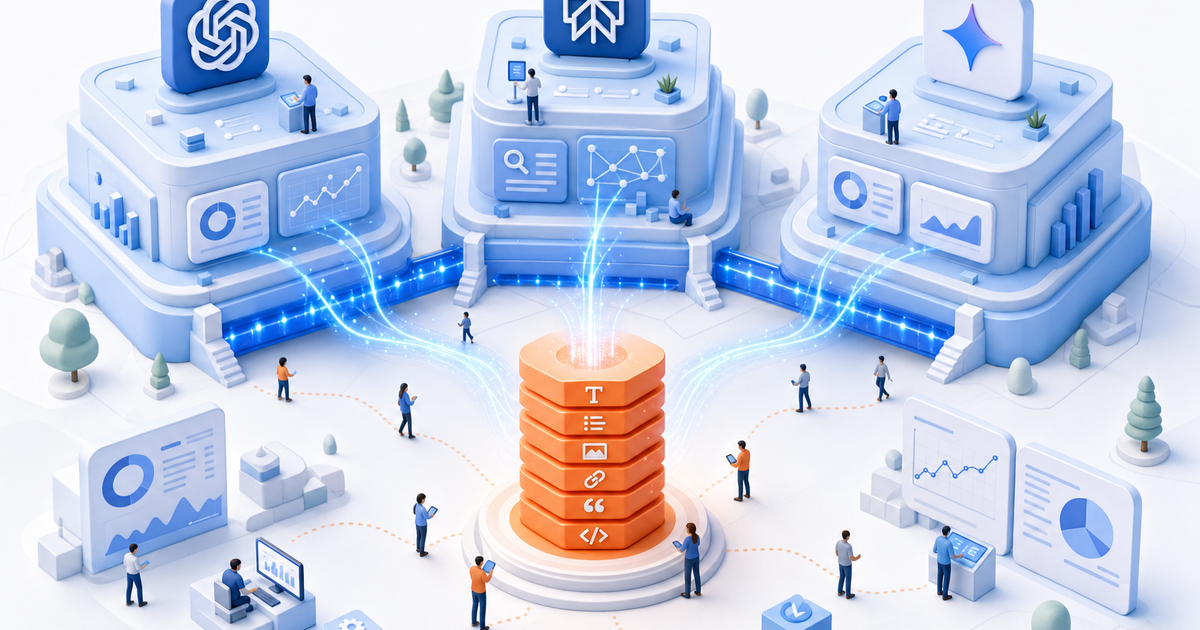
AI platforms now drive meaningful discovery traffic for B2B SaaS, and the pages they cite share a distinct on-page architecture. The six elements that consistently earn citations across ChatGPT, Perplexity, and Gemini are answer-format headings, BLUF openings, schema markup, original data, comparison sections, and fast page experience. This guide shows how each element works and which combinations produce measurable citation lifts.
Answer-Format Headings and Direct-Answer Capsules
Pages that structure H2s as questions followed by concise 20-25 word answers are cited 22% more often by AI tools than pages without this format. The pattern enables efficient extraction and makes statements independently citable outside their original context.
A well-structured section opens with a question-form heading, delivers the core answer in one or two sentences, then expands with supporting detail. AI systems parse this layout quickly, identify intent, and attribute the source with higher confidence.
Takeaway: H2s phrased as questions paired with immediate answers turn sections into standalone fact blocks that AI platforms treat as extraction-ready content.
The product onboarding software page that reformatted its feature descriptions into “How does [Product] reduce time-to-value?” followed by a 2-sentence summary saw citation frequency climb in Perplexity results within weeks.
BLUF Openings and Direct Statements
Bottom-line-up-front section openings materially improve citation rates because they place the citable fact first, not buried within narrative copy. AI platforms extract these leading statements with higher accuracy and attribute them more reliably than content that builds gradually.
A pricing page that opens with clear upfront cost information for mid-market teams and enterprise customers delivers the answer immediately. Context and qualifications follow, but the primary fact sits where AI retrieval systems look first.
This approach aligns with semantic search optimization: state the claim, then support it. Pages that reverse this order see lower citation frequency even when the same information appears deeper in the copy.
Schema Markup and Entity Clarity
SaaS pages with Organization, FAQPage, HowTo, and Article schema see 2-3× higher citation rates in AI search results. Structured data gives platforms machine-readable entity definitions, relationships, and content types that traditional HTML alone cannot surface with equal confidence.
Implementing structured data means AI systems understand who the product serves, what it solves, and how it compares. Clear entity definitions on the homepage paired with JSON-LD markup for key pages reduce ambiguity and increase attribution precision across ChatGPT, Perplexity, and Gemini.
- Organization schema for brand and contact information
- FAQPage markup on support and product overview sections
- HowTo schema for onboarding and integration guides
- Article schema for blog and case study content
Pages that combine a 2-sentence product definition at the top with well-implemented schema appear consistently in AI-generated answers and receive proper source attribution.
Original Data, Rich Statistics, and Third-Party Validation
SaaS pages featuring 19 or more data points average 5.4 AI citations, compared to 2.8 for pages with minimal quantitative content. AI platforms prioritize pages that offer concrete, verifiable facts over generic claims, and external validation from G2 or Capterra acts as a 6.5× citation multiplier.
A procurement SaaS feature page that embeds benchmark metrics, links to G2 category ratings, and cites recent industry reports for each quantitative claim becomes a preferred source for AI systems building answers. The density of verifiable information signals authority and trustworthiness.
Takeaway: Pages with proprietary or third-party validated data outperform generic copy by providing clear factual anchors that AI models can cite confidently.
Depth of data matters more than length of copy. Three well-sourced statistics in a 300-word section outperform a 1,200-word narrative with no numbers. This aligns with a broader go-to-market strategy focused on substantive differentiation over brand storytelling alone.
Comparison Sections and Topical Depth
Explicit competitor comparison sections increase citation frequency by 38% versus similar pages without them. Direct head-to-head feature tables and honest pros-and-cons demonstrate depth, transparency, and topical authority that AI systems recognize and reward with higher citation rates.
A revenue operations platform that maintains a “[Product] vs [Competitor]” section with linked implementation guides, case studies, and integration docs builds topical ownership. AI platforms interpret this interconnected content as expertise, not just marketing copy.
- Feature matrices comparing specific capabilities
- Use-case contrasts for different customer segments
- Pricing comparison tables with upfront disclosure
- Implementation time and support model differences
The most-cited SaaS pages treat comparisons as product information, not competitive positioning. They present alternatives openly and let data speak, which AI systems parse as credible and extraction-worthy.
Technical Experience: Speed, Freshness, and llms.txt
Fast pages with First Contentful Paint under 0.4 seconds average 6.7 ChatGPT citations, while pages above 1.13 seconds see only 2.1 citations-a roughly 3× lift tied directly to speed. Technical optimization signals reliability to AI retrieval systems and enables faster content access.
The top quartile of SaaS sites that combine sub-0.4s load times, clean schema, and an llms.txt file get cited 8.4× more often than the bottom half. Speed alone matters, but the compounding effect of speed, structure, and machine-readable metadata drives the largest citation gains.
Takeaway: AI platforms favor pages they can crawl quickly and parse reliably; sub-second load times paired with structured data create a measurable citation advantage.
An llms.txt file lists core pages, entity information, and key definitions in a lightweight format that large language models can read directly. Combined with answer-format sections and schema, it forms a technical foundation that all three major AI platforms reference when building responses.
FAQ
What on-page elements increase AI citation likelihood in 2026?
Pages optimized with answer-format headings, BLUF summaries, structured data, and comparison sections gain significantly more visibility in AI-generated results. These elements help tools like ChatGPT, Perplexity, and Gemini easily extract concise, fact-based answers.
Why do question-style H2 headings boost AI citations?
When H2s are phrased as questions followed by short direct answers, AI systems recognize clear intent and structure. This format simplifies answer extraction and increases confidence in attribution, making question-based sections a preferred layout pattern.
How does BLUF content compare to narrative intros for AI?
BLUF openings outperform narrative introductions because they deliver precise, citable statements at the top of sections. This directness enables AI platforms to capture and attribute facts efficiently, while narrative intros bury key details deeper.
Is schema markup more valuable than keyword optimization for AI?
Schema markup provides structured clarity about entities, relationships, and purposes – data that AI systems rely on for accurate referencing. While keywords still guide topical relevance, marked-up schema ensures machine readability and definition consistency.
Do original statistics influence AI citation frequency?
Yes, including proprietary or third-party validated data significantly boosts AI citation rates. Pages featuring numerous quantitative insights are considered more trustworthy, giving models clearer factual anchors than generic claims without supporting metrics.
How do comparison sections outperform generic SaaS copy?
Direct product comparisons against recognized competitors show depth, transparency, and topical authority – qualities AI systems prioritize. Including honest feature contrasts provides structured content that AI tools can easily parse and cite.
Sources
- Digital Applied – 500 SaaS Sites Audited: AI Citation Visibility 2026
- Discovered Labs – Perplexity Optimization: How to Get Cited & Linked
- Onely – Best AI Search Strategies for SaaS Companies in 2026
- GrowthOptix – AI Search Optimization for SaaS Companies in 2026