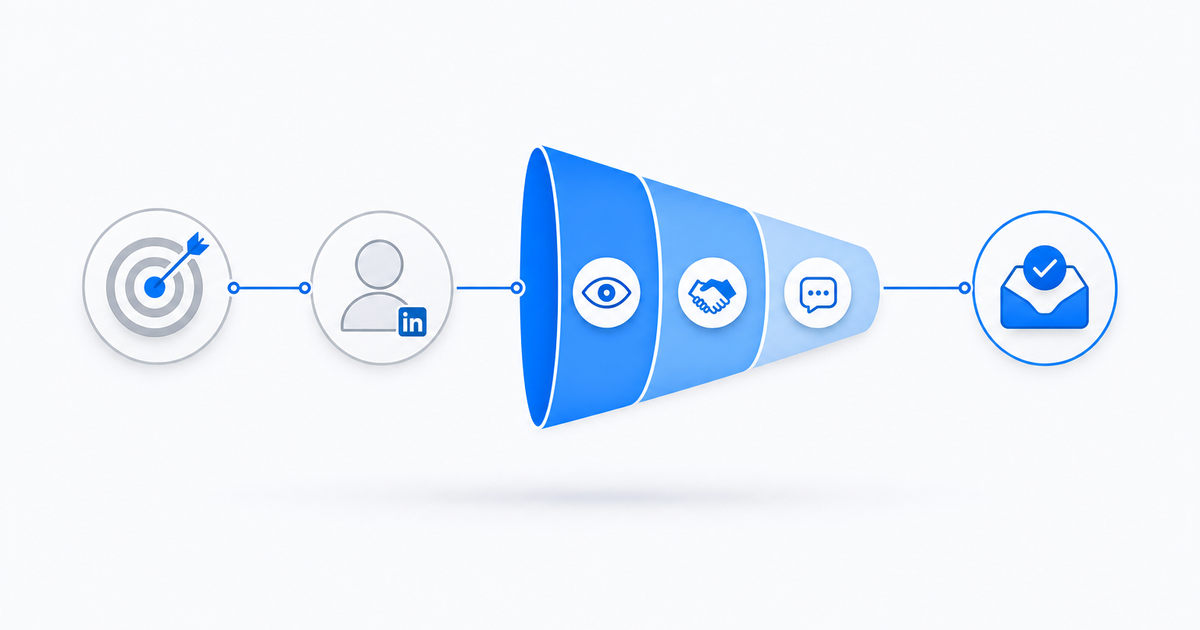
As of June 2026, a LinkedIn warm-up strategy ABM combines pre-outreach ads, organic engagement, and account insights from Clay to raise awareness among target buyers before any direct message is sent. This approach significantly lifts acceptance and reply rates compared to cold volume alone. This guide shows how to build enriched account lists, run sequenced LinkedIn campaigns, and time outbound messages when engagement signals prove accounts are ready.
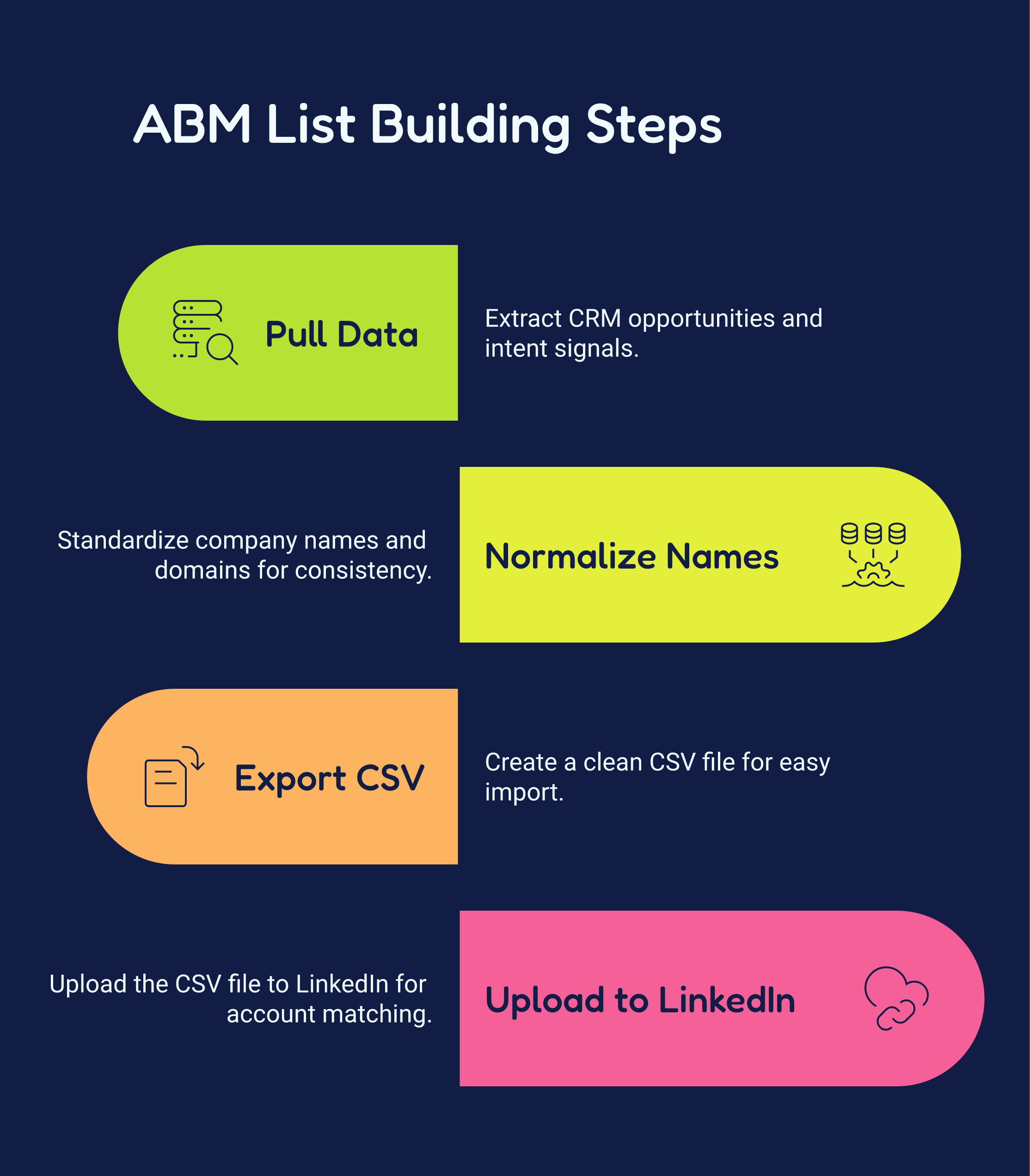
Build and Enrich ABM Lists in Clay for High LinkedIn Match Rates
Quick Answer: Clay pulls CRM opportunities, intent signals, and firmographic data into a master account list, normalizes company names and domains, then exports a clean CSV that LinkedIn can match at high rates to serve ads against decision-makers weeks before SDRs begin outreach.
95% of B2B marketers report that ABM delivers higher ROI than other marketing forms (Forrester “State of ABM 2024”). The first step is creating a reliable target list. Most CRMs contain incomplete company data, duplicate domains, or outdated contact records. Clay enrichment workflows solve this by pulling technographic and intent signals from multiple sources, standardizing company metadata, and appending missing fields such as employee count and industry classifications. The result is a single source of account truth that feeds both LinkedIn campaigns and multichannel sequences.
LinkedIn requires at least 300 matched members per audience to serve ads reliably, and recommends 50,000-plus members for Sponsored Content delivery at scale. Upload your Clay-enriched list as a company list rather than individual contacts. Company lists map directly to LinkedIn company pages and yield higher match rates. Once uploaded, layer function filters such as Marketing, IT, or Sales, then add seniority levels like Director, VP, or C-level. Exclude your own employees, existing customers if you are pursuing net-new logos, junior titles, and direct competitors to keep impressions focused on genuine buyers.
Takeaway: Clean, company-level uploads from Clay consistently deliver better audience match than contact lists and reduce wasted ad spend on irrelevant impressions.
Design a Sequenced LinkedIn Ad Journey to Raise Account Awareness
Quick Answer: Run a three-to-four-week ad sequence mixing thought-leadership content, persona-specific problem videos, and proof-based case studies, targeting matched audiences by role and seniority, to generate enough impressions and engagement signals before any message is sent.
LinkedIn reports that combining brand and demand tactics can improve win rates by two to three times in complex B2B sales (LinkedIn “Brand to Demand Playbook 2024”). A warming sequence typically includes three creative variants spaced over several weeks. Week one might deploy a carousel post sharing industry insights or provocative data points. Week two introduces a short video addressing a specific pain point relevant to each persona. Week three serves a case study or testimonial demonstrating proven outcomes. Aim to achieve at least three clicks per ad per persona to gather meaningful learning and lift awareness, as ABM experts recommend.
Build retargeting audiences around engagement signals. LinkedIn lets you retarget users who clicked an ad, watched 50% or more of a video, or visited your website. Feed those engagement tags back into Clay to calculate an account-level score. Accounts crossing a defined threshold, such as three ad interactions or two site visits within 14 days, become the priority segment for your eventual outbound motion. This ensures SDRs focus on warm accounts rather than cold volume.
- Thought-leadership carousel: Shares data or trends relevant to your ICP, no hard sell.
- Persona-specific problem video: Highlights pain points identified in customer interviews.
- Proof-based case study: Demonstrates measurable results and positions your brand as credible.
Layer Organic Engagement to Amplify Warm-Up and Reduce Cold Perception
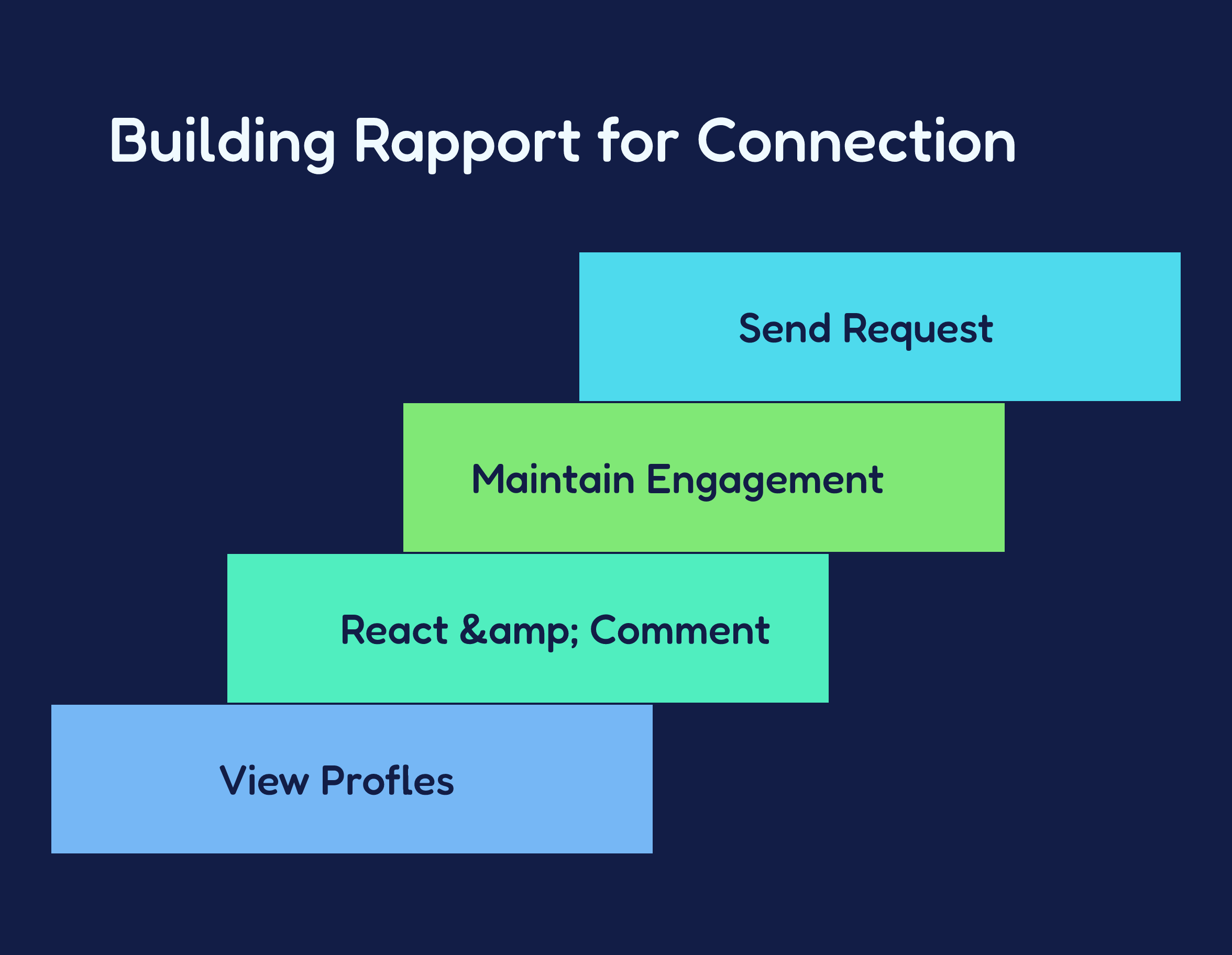
Quick Answer: Sales reps and marketers manually engage target contacts by viewing profiles, reacting to posts, and leaving thoughtful comments for two to three weeks before sending connection requests or direct messages, reducing cold perception and lifting acceptance rates.
Warm engagement like likes, comments, and profile visits before messaging is a key tactic to increase reply rates and make outreach less cold in 2026 LinkedIn playbooks. Allocate daily time for each SDR to interact with high-priority contacts visible in a Clay view. View profiles intentionally so the target sees the notification. React to posts and leave one or two meaningful comments per day. Avoid generic praise. Posting consistently and behaving like an active user reduces account restriction risk and improves organic reach.
Time this engagement window to overlap with your ad campaign. The combination of paid impressions and genuine social touches builds familiarity faster than either channel alone. This dual approach also supports broader warm-up strategies that blend brand, demand, and relationship-building before any formal cold outreach begins.
Takeaway: Manual engagement is not scalable across thousands of contacts, so focus it on your top 50 to 100 accounts where each deal matters most.
Sync Engagement Data into Clay and Trigger Outreach When Accounts Are Ready
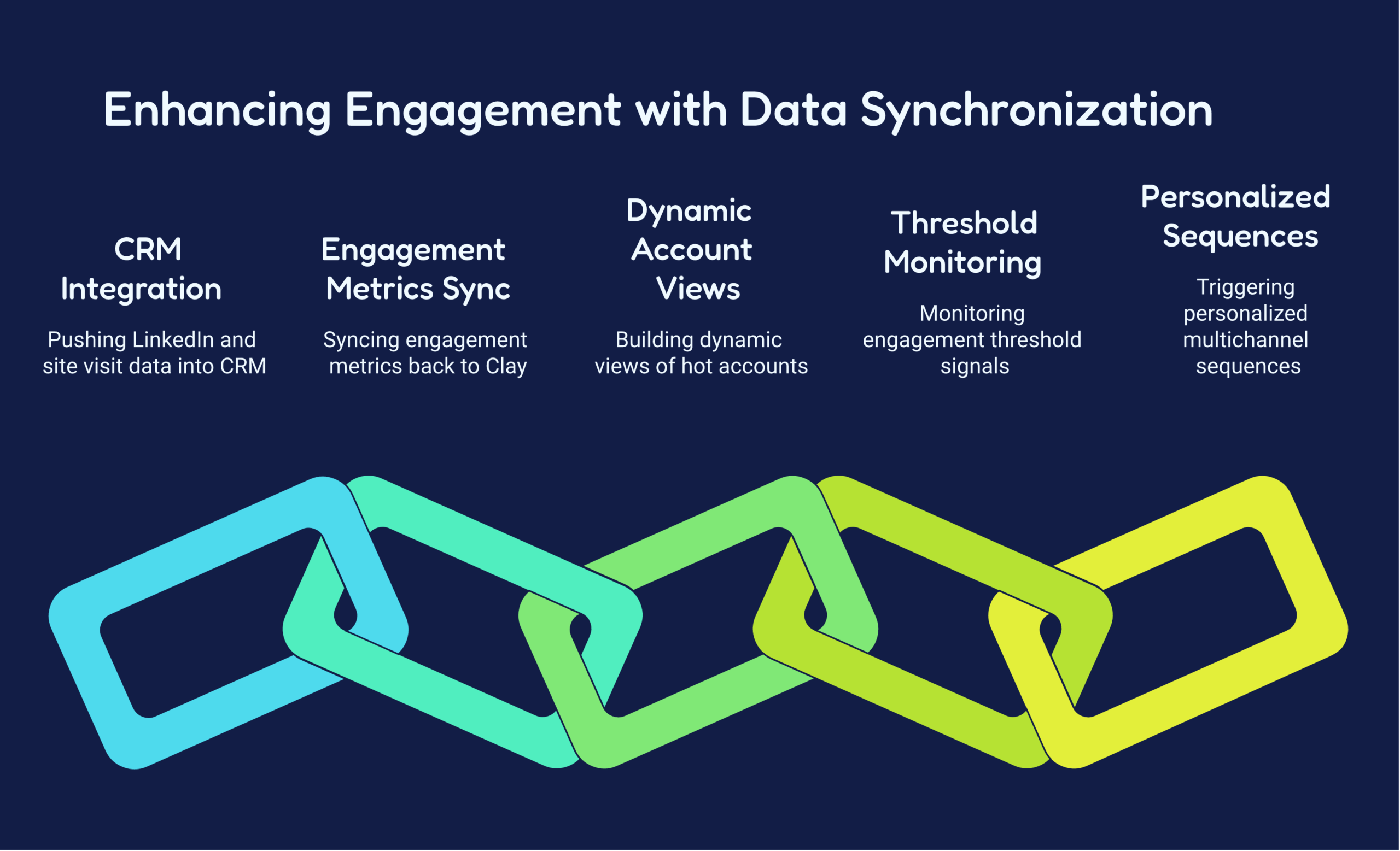
Quick Answer: Push LinkedIn campaign metrics and site visit data into your CRM, then sync back to Clay to build dynamic views that surface hot accounts crossing engagement thresholds, signaling SDRs to initiate personalized multichannel sequences at the optimal moment.
71% of B2B buyers expect highly personalized interactions in 2024, up from 66% in 2022 (Salesforce “State of the Connected Customer 2024”). ABM programs with tight sales and marketing alignment around shared account selection show substantially better pipeline contribution. Tracking account-level metrics like impressions, clicks, and deal velocity instead of just lead CTR is a core best practice. Pipe campaign and engagement data back into your CRM and Clay. Create views that highlight accounts with three or more ad engagements or two or more website visits within a rolling 14-day window. Route those hot accounts to SDRs as the first wave for outreach.
A common LinkedIn outreach pattern is one initial message followed by two to three follow-ups spaced at least 24 hours apart for optimal reply rates. SDRs should trigger Clay sequences only after accounts cross the warm threshold. Personalize the first line by referencing a recent post, ad they engaged with, or content they downloaded. Follow-ups remain polite and value-focused, offering a specific resource or insight rather than repeating the same ask. This timing and personalization lift response rates far above cold volume alone.
FAQ
What is the best way to warm ABM accounts on LinkedIn?
The most effective way is to run a short pre-outreach campaign that mixes LinkedIn ads, organic engagement, and account insights from Clay. This approach raises awareness among key buyers, builds familiarity with your brand, and improves acceptance and reply rates when personalized outreach begins.
How long should LinkedIn warming last before cold outreach?
A period of two to three weeks is typical, depending on ad frequency and engagement data from Clay. This window provides enough time for multiple ad impressions, social touches, and retargeting signals to establish awareness while avoiding fatigue or wasted spend before the outbound phase.
Clay vs CRM: which is better for ABM list building?
Clay offers faster list enrichment and dynamic data syncing across marketing tools, while CRM systems mainly store static account information. Combining both works best: use Clay to normalize company data, pull intent and technographics, then push clean account segments back into your CRM for campaign execution.
LinkedIn ads vs organic engagement: which warms accounts faster?
LinkedIn ads deliver faster reach across decision-makers, while organic engagement builds deeper familiarity. Ads generate visibility and measurable clicks, ideal for broad awareness, whereas commenting and profile visits from sales reps help establish authenticity. Using both together achieves quicker and more genuine account warming before outreach.
What is a good engagement threshold before outreach?
An effective threshold combines ad engagements, profile visits, or website actions tracked through Clay. For example, three ad clicks or two significant site visits in two weeks indicate awareness. Reaching these signals suggests the account is ready for personalized multichannel outreach from your sales team.
How many ads should run before sending messages?
Experts recommend three to four LinkedIn ad variants run over several weeks. This sequence should mix thought-leadership, problem awareness, and proof-based content. Collecting engagement signals after multiple impressions allows your team to identify interested prospects and prioritize those warm contacts for personalized outreach.