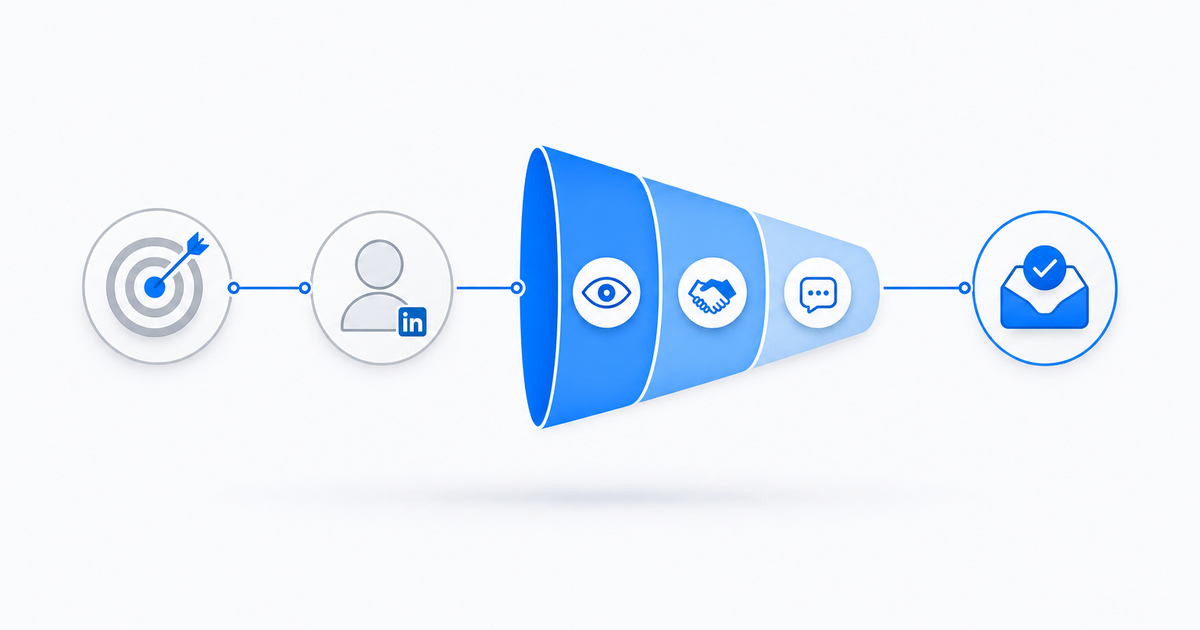
A LinkedIn warm-up strategy ABM combines pre-outreach ads, organic engagement, and account insights from an enrichment tool to raise awareness among target buyers before any direct message is sent. The idea is that the recipient already knows your brand when the first message arrives. This guide shows how to build enriched account lists, run sequenced LinkedIn campaigns, and time outbound messages when engagement signals show that accounts are ready.
Build and Enrich ABM Lists with an Enrichment Tool for High LinkedIn Match Rates
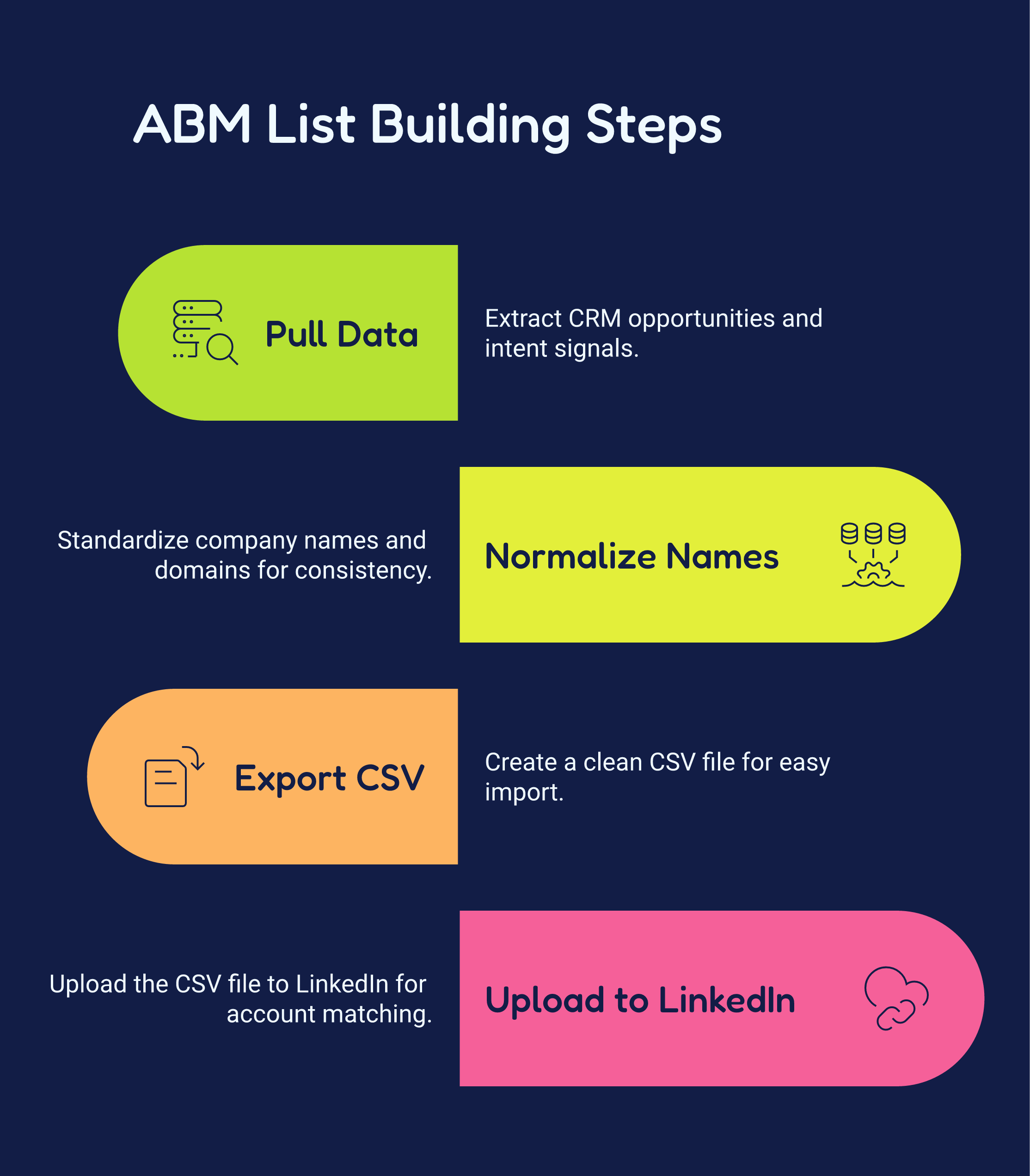
Quick Answer: An enrichment tool pulls CRM opportunities, intent signals, and firmographic data into a master account list, normalizes company names and domains, then exports a clean CSV per ICP cluster for LinkedIn Matched Audiences. With clean names and domains, Via Digital (German-language source) reports match rates of up to 90% for company lists, so ads can reach decision-makers weeks before SDRs begin outreach.
The first step is creating a reliable target list. Most CRMs contain incomplete company data, duplicate domains, or outdated contact records. An enrichment tool solves this by pulling technographic and intent signals from multiple sources, standardizing company metadata, and appending missing fields such as employee count and industry classifications. The result is a single source of account truth that feeds both LinkedIn campaigns and multichannel sequences.
LinkedIn requires an audience of at least 300 member accounts to run an ad set, so each cluster must stay large enough. Upload your enriched list as a company list rather than individual contacts. Once uploaded, layer function filters such as Marketing, IT, or Sales, then add seniority levels like Director, VP, or C-level. Exclude your own employees, existing customers if you are pursuing net-new logos, junior titles, and direct competitors to keep impressions focused on genuine buyers.
Takeaway: Clean, company-level uploads are the foundation for a good audience match and less wasted ad spend on irrelevant impressions.
Design a Sequenced LinkedIn Ad Journey to Raise Account Awareness
Quick Answer: Run a three-to-four-week ad sequence mixing thought-leadership content, persona-specific problem videos, and proof-based case studies, targeting matched audiences by role and seniority. The target is four to eight touchpoints per person, which Via Digital (German-language source) names as the goal before sales gets active.
An ABM approach targets the whole buying committee, not individuals. Typical roles are VP Sales, Head of Marketing, or RevOps Lead. Create a separate data set per role and run each as its own ad group. Job level and department filters make sure C-level sees strategic content while functional teams get tactical guidance. According to Via Digital, effective LinkedIn ABM setups use staged funnels, even for small audiences of 2,000 to 5,000 people, and the same source puts the goal at an audience penetration above 80% with four to eight touchpoints per person.
A warming sequence typically includes three creative variants spaced over several weeks. Week one might deploy a carousel post sharing industry insights or provocative data points. Week two introduces a short video addressing a specific pain point relevant to each persona. Week three serves a case study or testimonial demonstrating proven outcomes. As a rule of thumb for meaningful performance data, ZenABM names at least three clicks or engagements per ad per day. Several ad variants per ad group allow creative testing and budget shifts to the strongest ads.
Build retargeting audiences around engagement signals. LinkedIn lets you retarget users who clicked an ad, watched a video, or visited your website. Feed those engagement signals back into your CRM to calculate an account-level score. Accounts crossing a defined threshold become the priority segment for your eventual outbound motion. This ensures SDRs focus on warm accounts rather than cold volume.
- Thought-leadership carousel: Shares data or trends relevant to your ICP, no hard sell.
- Persona-specific problem video: Highlights pain points identified in customer interviews.
- Proof-based case study: Demonstrates results and positions your brand as credible.
Layer Organic Engagement to Amplify Warm-Up and Reduce Cold Perception
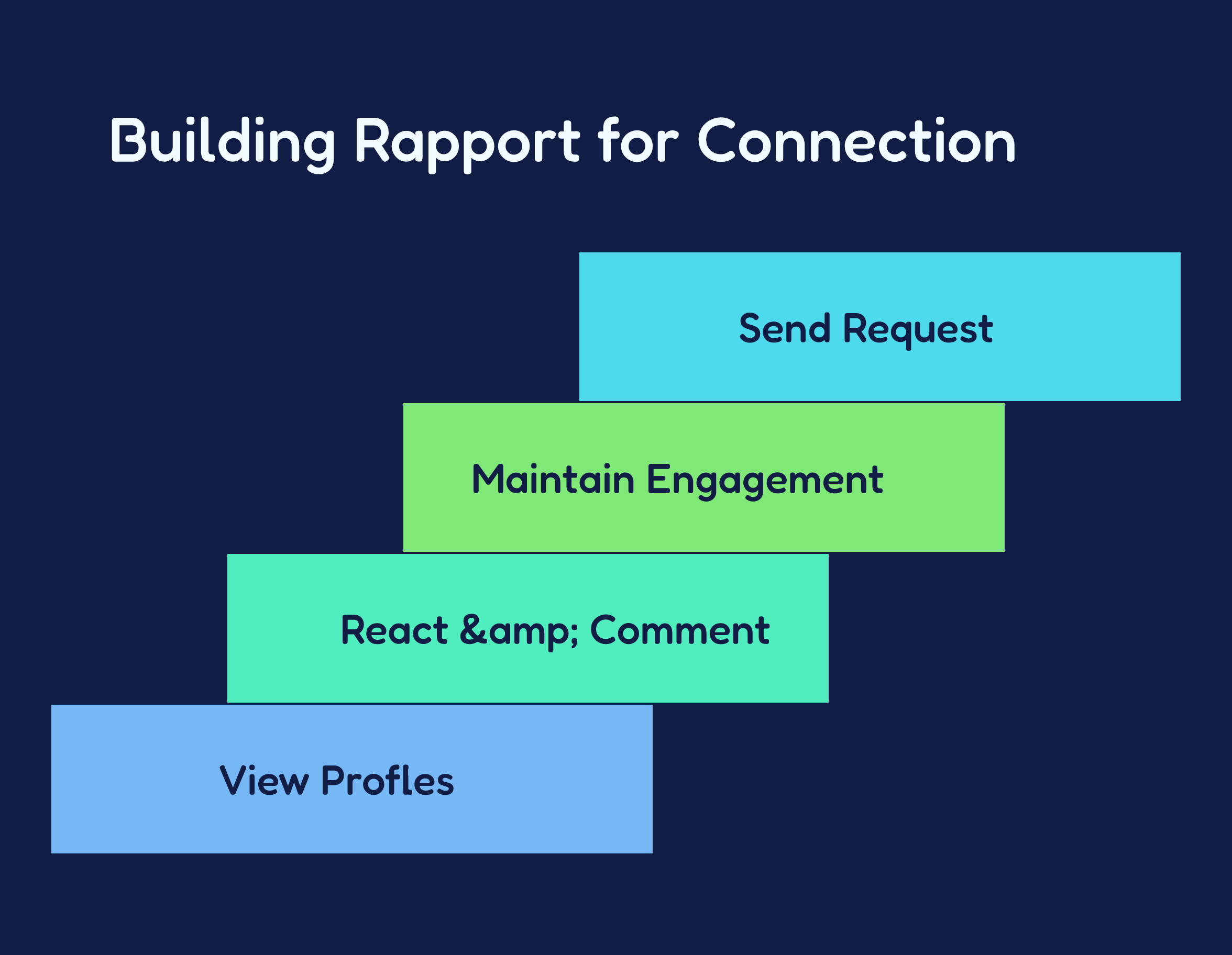
Quick Answer: Sales reps and marketers view profiles, react to posts, and leave thoughtful comments on target contacts before sending connection requests or direct messages, reducing cold perception.
The outbound agency Martal recommends that you view the profile, follow the company page, or leave an insightful comment a day or two before you reach out, and reports that this boosts acceptance rates. Allocate daily time for each SDR to interact with high-priority contacts visible in a CRM view. React to posts and leave one or two meaningful comments per day. Avoid generic praise and keep the interaction relevant to the topic of your ads.
Time this engagement window to overlap with your ad campaign. The combination of paid impressions and genuine social touches builds familiarity faster than either channel alone. This dual approach also supports broader warm-up strategies that blend brand, demand, and relationship-building before any formal cold outreach begins.
Takeaway: Manual engagement does not scale across thousands of contacts, so focus it on your most important target accounts where each deal matters most.
Sales Handshake: When to Hand Accounts Over to Outreach
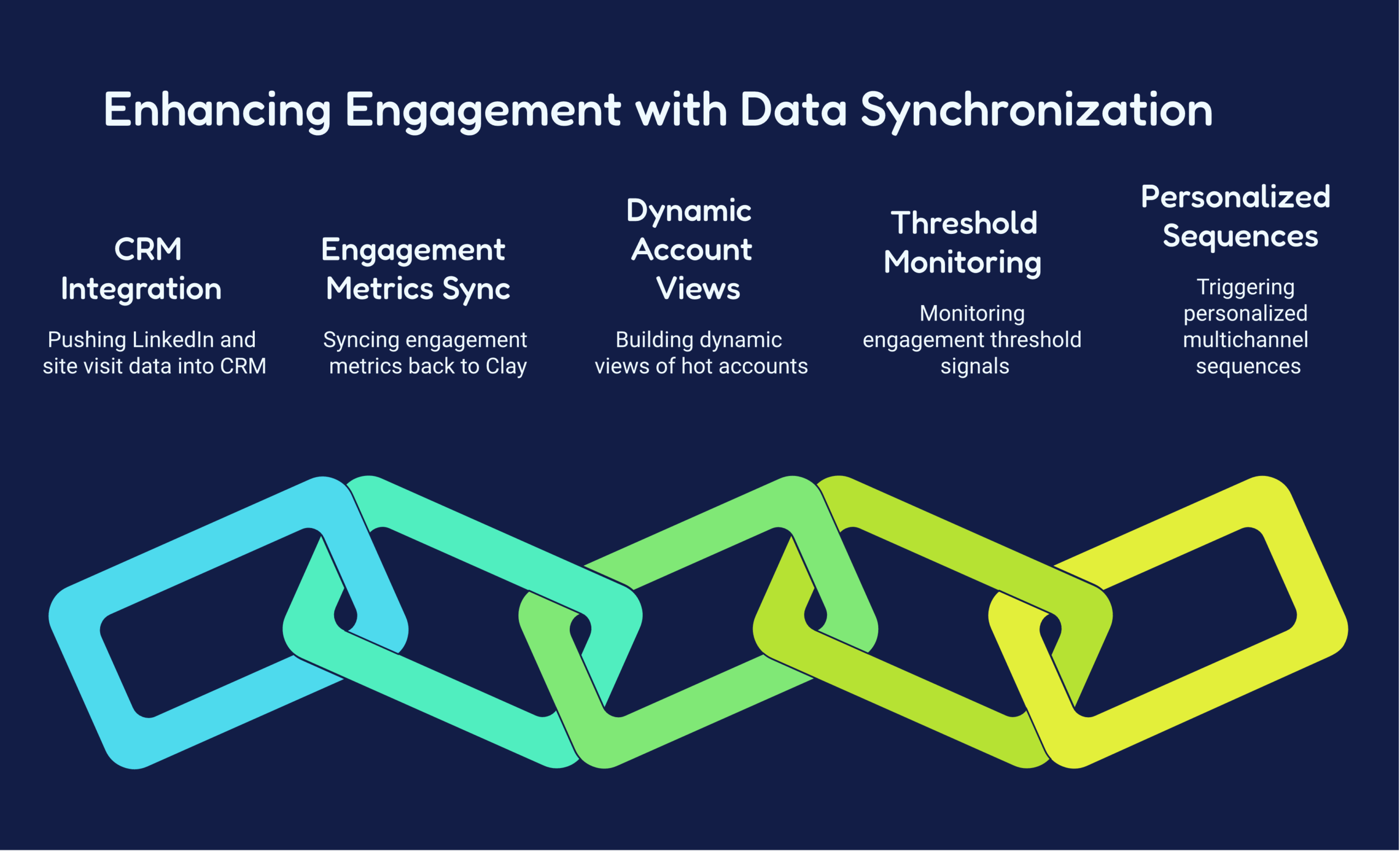
Quick Answer: As a practical rule of thumb, we treat an account as warm when at least three people from the buying committee have each seen four or more impressions or have had two content interactions (click, comment, share) within 14 days. The LinkedIn Company Engagement Report (German-language source) shows these signals per account. Marketing hands warm accounts to sales every week, and sales starts personalized sequences.
The Company Engagement Report shows engagement signals per account such as likes, comments, and shares. Teams export a list of accounts with high engagement every seven days and import it into the CRM or sequencing tool, where a dedicated outreach play starts, for example a Loom video sequence referencing the post the account saw last. Cold accounts stay in the paid warm-up. The threshold above is our suggestion and should be adjusted to your own data after the first weeks.
Tracking account-level metrics like impressions, clicks, and engagement per account instead of just lead CTR is a core best practice. Key ABM KPIs are account engagement rate, cost per account engagement, and pipeline impact, meaning qualified opportunities from warm accounts. Pipe campaign and engagement data back into your CRM and create views that highlight accounts crossing the threshold. Route those hot accounts to SDRs as the first wave for outreach.
Sequences After the Warm-Up: Outreach with Context Instead of a Generic Pitch
Quick Answer: Sequences start only for accounts marked as warm. Each message refers to a specific post or case study the account has seen and builds on the known pain cluster. We avoid generic templates and adapt the message to current triggers such as open roles or recently consumed content.
According to Leadeffect (German-language source), most conversations do not arise after the first message but after several touchpoints over one to two weeks. The warm-up window and the data from the LinkedIn engagement report supply those touchpoints in advance. A typical first line refers to the post or benchmark the account saw and links directly to it. Personalize it with a recent post, an ad they engaged with, or content they downloaded. Martal names two follow-ups spaced two to five business days apart as a sensible rhythm. Follow-ups stay polite and value-focused, offering a specific resource or insight rather than repeating the same ask.
A sequencing tool can import warm-account signals and start sequences once thresholds are reached. Each message adapts to current triggers such as tech stack changes or recently posted job openings instead of pitching the product generically. Timing and personalization are what lift response rates over cold volume.
- Trigger-based sequences: Open role in the RevOps team, then outreach with a matching case study.
- Content reference: “You saw our post on X”, a direct link to the warm-up creative.
- Pain cluster focus: Each message builds on the known pain instead of listing generic features.
Our principle: context before template volume.
Legal Framework for Outreach in the DACH Region
The warm-up through ads and organic engagement does not replace a legal basis for the direct outreach that follows. Under Section 7(2) no. 2 of the German Unfair Competition Act (UWG), advertising by email requires the addressee’s prior express consent, also in B2B. The exception in Section 7(3) UWG applies only to existing customers under narrow conditions. Telephone advertising to other market participants requires at least presumed consent under Section 7(2) no. 1 UWG. We recommend treating promotional LinkedIn direct messages cautiously, like email advertising.
Under data protection law, processing contact data usually rests on Article 6(1)(f) GDPR (legitimate interests, after a balancing test). If the data was not collected from the data subject, the information duty under Article 14 GDPR applies, at the latest at the time of the first communication. This is orientation, not legal advice; have your approach reviewed for your specific case.
FAQ
What is the best way to warm ABM accounts on LinkedIn?
An effective warm-up combines targeted LinkedIn ads with content tailored to the buying committee’s pain points, plus organic engagement. Via Digital names four to eight touchpoints per person as the goal before sales steps in and starts personal outreach.
How long should the warm-up last before outreach?
We plan three to four weeks for the ad sequence, with organic engagement running in parallel. This window is long enough for several impressions, social touches, and retargeting signals, without causing fatigue or unnecessary cost before the outbound phase.
What is the difference between ABM warm-up and normal LinkedIn outreach?
An ABM warm-up focuses on the whole target account and uses enrichment data for personalized messages before sales makes contact. Normal outreach often starts directly, without first making the account familiar with your brand through content interactions or ads.
LinkedIn ads vs organic engagement: which warms accounts faster?
LinkedIn ads reach decision-makers faster and deliver measurable clicks, ideal for broad awareness, whereas commenting and profile visits from sales reps build familiarity and authenticity. Using both together warms accounts faster and more credibly than either channel alone.
How do you define “warm” accounts before outreach?
An account counts as warm when several people from the buying committee have seen ads repeatedly or interacted with content. Our rule of thumb is four to eight impressions per person or at least two interactions before the sales handshake happens and sequences start.
How many ad variants should run before sending messages?
As a rule of thumb, three variants over several weeks, mixing thought-leadership, problem awareness, and proof-based content. Engagement signals after several impressions show which contacts are interested and should be approached first with personalized messages.
Which legal rules apply to outreach after the warm-up in the DACH region?
Under Section 7(2) no. 2 UWG, email advertising requires prior express consent, also in B2B (exception only for existing customers under Section 7(3)). Telephone advertising to businesses requires at least presumed consent (Section 7(2) no. 1). For data protection, Article 6(1)(f) and Article 14 GDPR apply.