
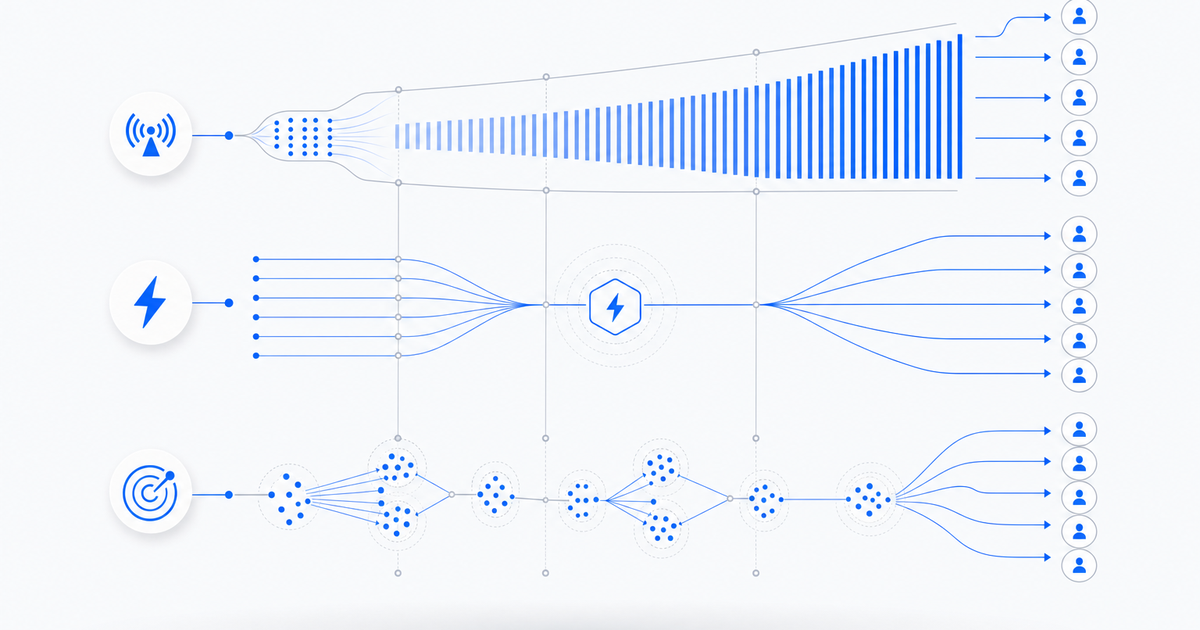
Most outbound teams run one play for every account. A 3-tier system splits your total addressable market into volume, trigger, and signal campaigns, matching effort to intent. This guide shows how to structure outreach across your full TAM so every account gets the right touch at the right time.
Volume campaigns: always-on coverage of your full TAM
Volume campaigns target every ICP-matched account with low-effort, templated email sequences and light LinkedIn touches. They maintain visibility across large prospect lists while freeing SDR time for high-fit or high-signal accounts that show stronger conversion potential.
A tiered approach allows a single SDR to manage 200–300 prospects per month while preserving capacity for priority plays. Volume outbound keeps the pipeline full without requiring deep personalization for every contact.
Most mid-market teams run always-on sequences against their full TAM. Email serves as the primary channel. LinkedIn adds authority through profile visits and connection requests.
Channel roles clarify effort: email for reach, phone for warmth, LinkedIn for credibility. That separation increases connect rates in structured outbound programs.
Takeaway: Volume campaigns ensure every account in your TAM sees your message, even when signals are absent.
Trigger campaigns: event-driven outreach when timing matters
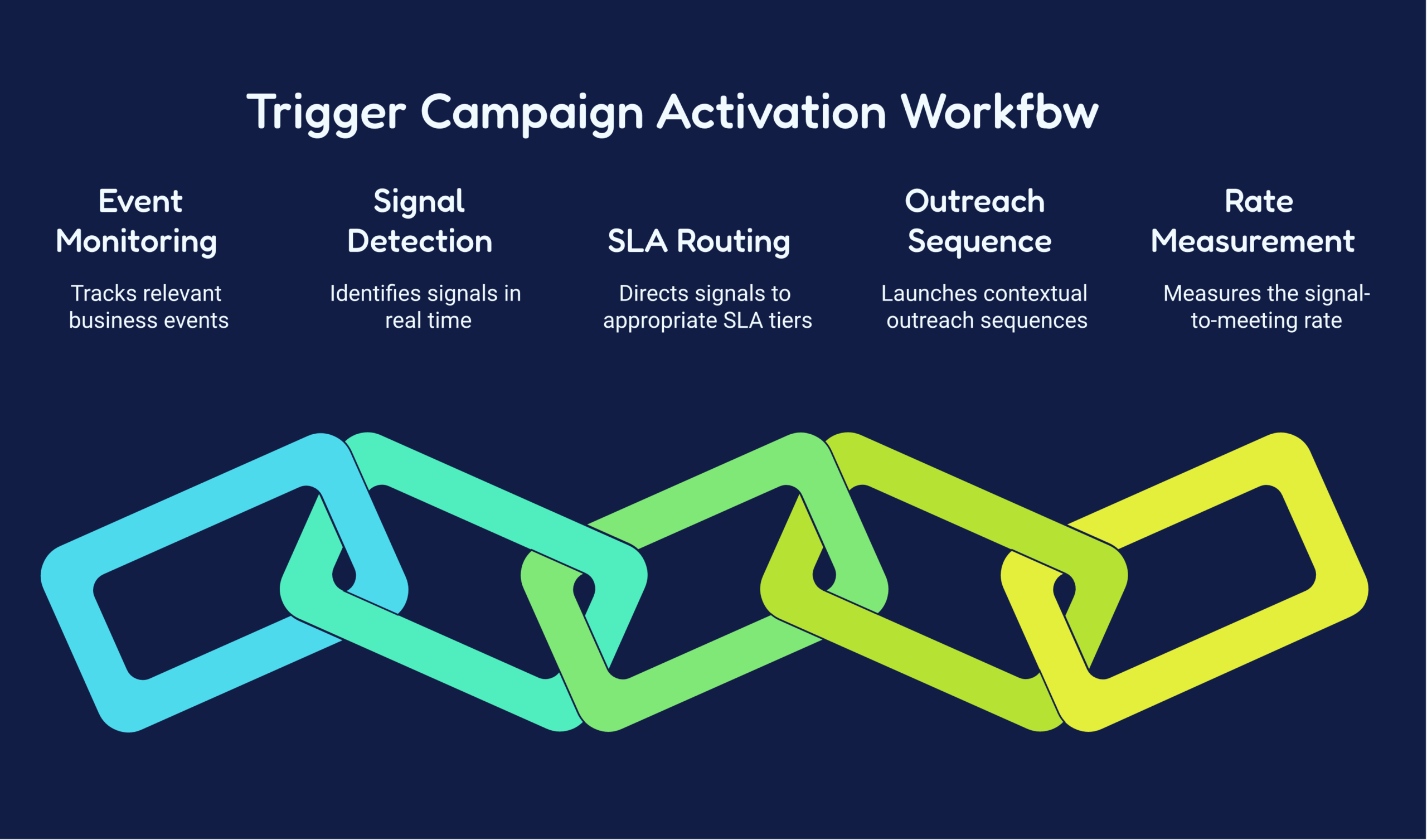
Trigger campaigns activate on relevant events like funding rounds, executive hires, or pricing-page visits. They capitalize on narrow timing windows to reach prospects immediately, lifting engagement by aligning outreach with genuine business change detected in real time.
Best-practice playbooks define hot, warm, and cold tiers with clear SLAs: hot triggers under two hours, warm same day, cold no trigger. That speed matters when competitors also watch the same signals.
A PLG company monitors senior hiring and product-page visits. When any Tier 1 trigger fires for a high-fit account, a hot sequence launches with a direct meeting ask and context referencing the event.
Trigger discipline requires pruning. Weekly reviews remove underperforming events. Teams test 3–5 core signals per ICP for a full quarter, measuring signal-to-meeting rate rather than activity volume.
Signal-led frameworks recommend a deliberate 7-day delay for most intent signals. That pause improves meeting conversion, letting buying committees form consensus before you reach out.
Trigger campaigns work when an event indicates new budget, pain, or urgency. Funding announcements and leadership changes create natural entry points. The broader discussion of cold versus warm outreach becomes less relevant when timing matches a real business moment.
Signal campaigns: high-touch plays for stacked intent
Signal campaigns concentrate on accounts showing stacked behavioral, situational, or technographic data. They involve deeper personalization and multi-channel sequences, capitalizing on high-value opportunities where engagement is three to five times more effective than generic cold outbound.
Modern signal-based outbound uses real-world data: job postings, funding, LinkedIn activity, website visits, tech installs. Signal-based campaigns can outperform generic cold outbound by 3–5× in effectiveness when built around intent data and clear routing rules.
A RevOps team builds six “reach out now” archetypes in Clay. Each archetype combines tiers of signals: hiring spikes plus tech install plus content consumption. Sequences trigger only when the archetype threshold is hit. The rule is simple: no archetype, no outreach.
Scoring matters. TAM/SAM/SOM segmentation, paired with account scoring, sets pipeline targets and allocates outreach waves. Best-practice signal workflows follow a loop: detect signals, score and prioritize, route owner, trigger play, measure and refine.
Measurement separates signal campaigns from volume plays. Track signal-to-meeting rate per archetype. Prune signals below 3% meeting conversion every quarter to maintain efficiency.
Takeaway: Signal campaigns focus effort where data proves buying intent, raising win rates and deal sizes.
Orchestration: automating the 3-tier system
Automation handles sequencing, routing, and follow-up, assigning leads to volume, trigger, or signal tiers based on fit and behavior. When a key trigger appears, systems enroll contacts automatically and notify reps, ensuring consistent timing and cleaner data across your outbound motion.
Sales automation removes repetitive tasks like lead research and follow-ups. It keeps high-context conversations human while the system manages low-judgment work.
Integration ties everything together. Intent providers feed CRM and sales engagement platforms. When a signal threshold is crossed, the system enrolls contacts into the right sequence and creates tasks for reps. Dashboards track meetings-booked and win rate by trigger.
Metrics vary by tier:
- Volume campaigns: reply rate and meeting rate across full TAM
- Trigger campaigns: meetings booked and speed to response by event
- Signal campaigns: win rate and deal size by archetype
Measuring separately helps refine each play’s effectiveness. Resources flow toward proven drivers. 39% of marketers cited lead quality and MQLs and 34% cited lead-to-customer conversion as top metrics in 2026, underscoring the shift from activity to pipeline outcomes.
RevOps sets dashboards that break out performance by tier. Quarterly pruning removes low-yield signals. HubSpot’s 2026 report confirms that conversion metrics now outweigh volume metrics for most B2B teams.
Takeaway: Automation and tier-specific measurement turn the 3-tier system into a repeatable engine that scales without adding headcount.
FAQ
What is a 3-tier outbound system in B2B sales?
A 3-tier outbound system divides your total addressable market into structured layers: volume, trigger, and signal campaigns. This approach allows scalable outreach across all accounts while focusing resources on higher-value prospects identified through buying signals or fit scores, increasing efficiency and conversion potential.
How do volume campaigns cover your full TAM effectively?
Volume campaigns target your full TAM with consistent, low-effort outreach such as templated emails and light LinkedIn touches. They ensure continuous visibility across large prospect lists, keeping the pipeline full while allowing SDRs to focus time on high-fit or high-signal accounts that show stronger potential.
What are trigger campaigns and when should you use them?
Trigger campaigns activate when a relevant event occurs, like a funding round or leadership hire. They capitalize on a narrow timing window to contact interested prospects immediately, increasing the likelihood of engagement by aligning outreach with genuine business change or intent signals detected in real time.
How do signal campaigns differ from volume campaigns?
Signal campaigns concentrate on accounts showing stacked intent or behavioral data, while volume campaigns aim for broad coverage. Signal plays involve deeper personalization and higher-touch outreach to capitalize on high-value opportunities, whereas volume campaigns prioritize reach and consistency across your total addressable market.
How should you automate a 3-tier outbound system?
Automation tools handle tasks like sequencing, routing, and follow-up, assigning leads based on signals or tiers. When a key trigger appears, systems can automatically enroll contacts into the appropriate play while notifying reps, ensuring consistent timing, cleaner data, and faster responses to real buying intent.
How do you measure success across volume, trigger, and signal tiers?
Success metrics vary by tier: volume campaigns on reply rates, trigger campaigns on meetings booked and speed to response, and signal campaigns on win rate and deal size. Measuring these separately helps refine each play’s effectiveness and ensure resources align with proven growth drivers.