
Cold email and cold calling differ first legally and only then in performance, at least in Germany. Advertising by email to a business needs prior express consent under section 7(2) no. 2 of the German Unfair Competition Act (UWG), and an advertising call to a business needs at least presumed consent under no. 1. On the numbers, Backlinko analyzed 12 million outreach emails and found an average response rate of 8.5%, while Cognism puts the 2025 cold calling success rate at 2.3%. Both are vendor datasets and measure different things, so treat them as orientation, not proof for your market.
Email is asynchronous: the recipient decides when to read it, and the message stays available for reference and forwarding. That is a real advantage over an unannounced call, but it does not remove the consent requirement. The sections below compare the two channels on response, cost, scalability and law, and say where we found no reliable data.
Key Takeaways
- In Germany, cold email to businesses requires prior express consent (section 7 UWG); for phone calls to businesses, presumed consent is enough
- Measured rates differ by method: Backlinko found 8.5% responses to outreach emails, Cognism a 2.3% cold calling success rate
- Email is asynchronous: recipients respond on their own timeline, though some buyers still prefer the phone
- Email campaigns offer scalability and tracking for data-driven optimization, within the limits of deliverability and consent
- Personalized message bodies had a 32.7% better response rate and one extra follow-up up to 65.8% more replies in the Backlinko study
Response Rates Compared
Email Outreach Performance Metrics
The two numbers are only loosely comparable. According to Backlinko, 8.5% of 12 million outreach emails received a response. Cognism puts the cold calling success rate at 2.3% for 2025 (2024: 4.82%) but does not define “success” clearly. A reply to an email is not the same as a successful call, and neither study evaluates German B2B sales specifically.
Email is non-intrusive. Recipients can review your message when they are ready to consider new solutions, rather than being caught off-guard during a busy workday. Whether this beats the phone depends on your audience.
Reaching Buyers by Phone
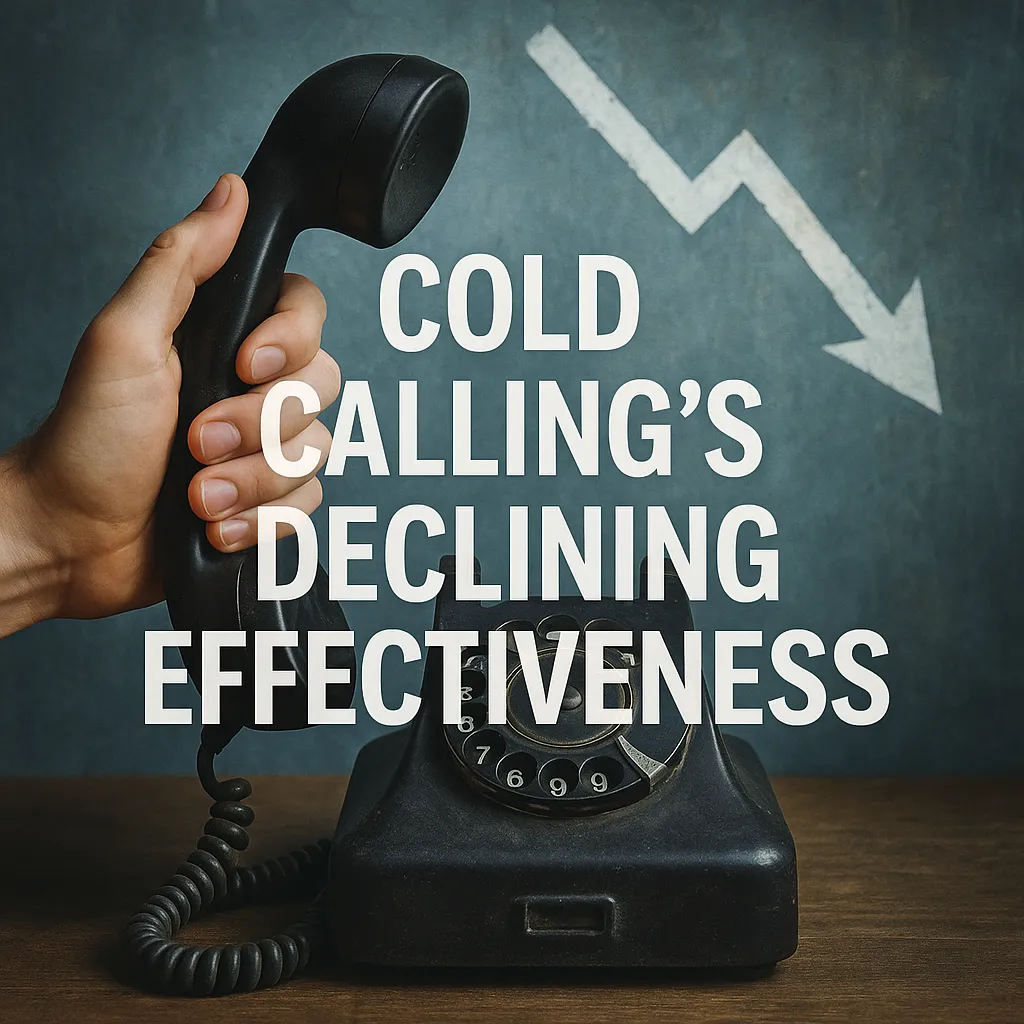
Cold calling success rates are low and volatile: Cognism reports 4.82% for 2024 and 2.3% for 2025. Reaching people is hard as well, with an average of 8 call attempts to reach a prospect. Fairly, the same source also states that 49% of buyers prefer to be contacted by phone first, so the right channel depends on your audience.
For email, Backlinko found that a single additional follow-up leads to 65.8% more replies and that emailing the same contact multiple times produces twice as many responses.
Cost: What We Can and Cannot Say
Calling Costs Time
We found no reliable, independent figure comparing the cost per qualified lead of cold calling and email, so we do not quote one. Cost depends on target group, data quality, salaries and tools. Calculate with your own numbers: staff cost per contact, tool and data cost, and the rate from contact to booked meeting.
A call ties up one person for its full duration, and many attempts end without a conversation. That time is the main cost driver of phone prospecting.
Scalability and Limits of Email
Email sequences run in parallel with tools and scale more easily than calls once you have invested in effective email strategies. The limits are deliverability and consent: Google requires senders of more than 5,000 messages per day to set up SPF, DKIM and DMARC and to keep the spam rate below 0.30%.
Without consent, reach is not an advantage but a legal risk. That is why the legal basis comes before any cost comparison.
Asynchronous and Traceable: Where Email Has the Edge
The Asynchronous Advantage
Decision makers have full calendars, and an unannounced call interrupts their workflow. Email lets prospects engage on their timeline and keeps complete information at their fingertips for reference and sharing with team members.
Email lets prospects consider your proposal, research your company and share it with colleagues before responding. The written record also supports committee-based decisions.
Information Processing and Decision Making
Email supports research by providing written documentation that prospects can save, forward and reference. Phone conversations lack this persistent reference value.
A single email can be forwarded to several stakeholders, shared in team meetings and referenced during budget discussions, which a phone call cannot do.
Scalability and Automation: Building Systems That Scale
Technology-Enhanced Personalization
Email platforms can personalize at scale through automation and data integration. Sales teams can build dynamic email sequences that adapt to company characteristics and industry-specific pain points, as long as the underlying data is accurate.
AI writing assistants, segmentation tools and behavioral triggers help small teams work more systematically. Review AI-generated drafts yourself before they go live.
Measurement and Optimization
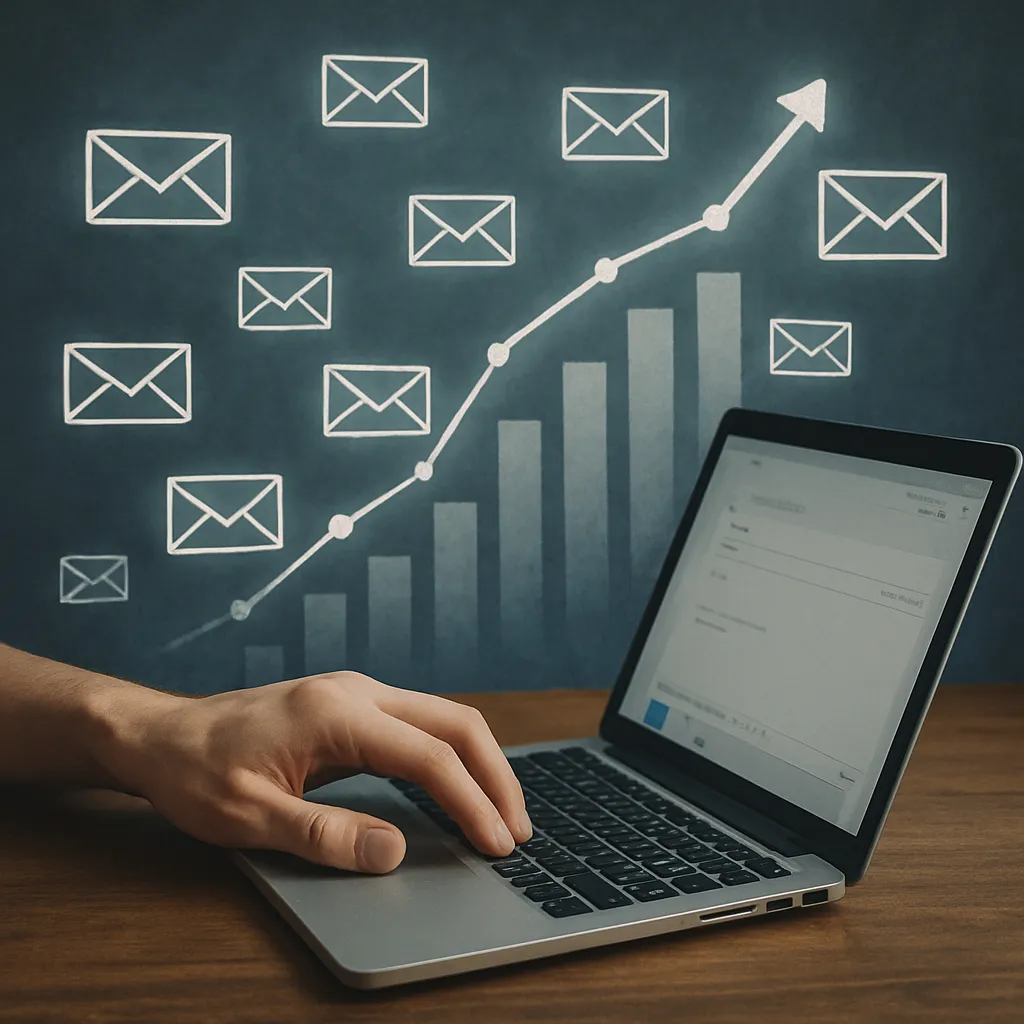
Email campaigns provide granular analytics that enable continuous improvement. Open rates, click-through rates, response rates, and conversion metrics offer clear insights into what messaging resonates with different prospect segments. This data-driven approach allows teams to optimize performance systematically rather than relying on anecdotal feedback from individual phone conversations.
The ability to A/B test subject lines, messaging approaches, and call-to-action strategies creates a learning system that improves over time. Cold calling offers no equivalent mechanism for systematic optimization and improvement.
Strategic Implementation: Building Your Email Advantage
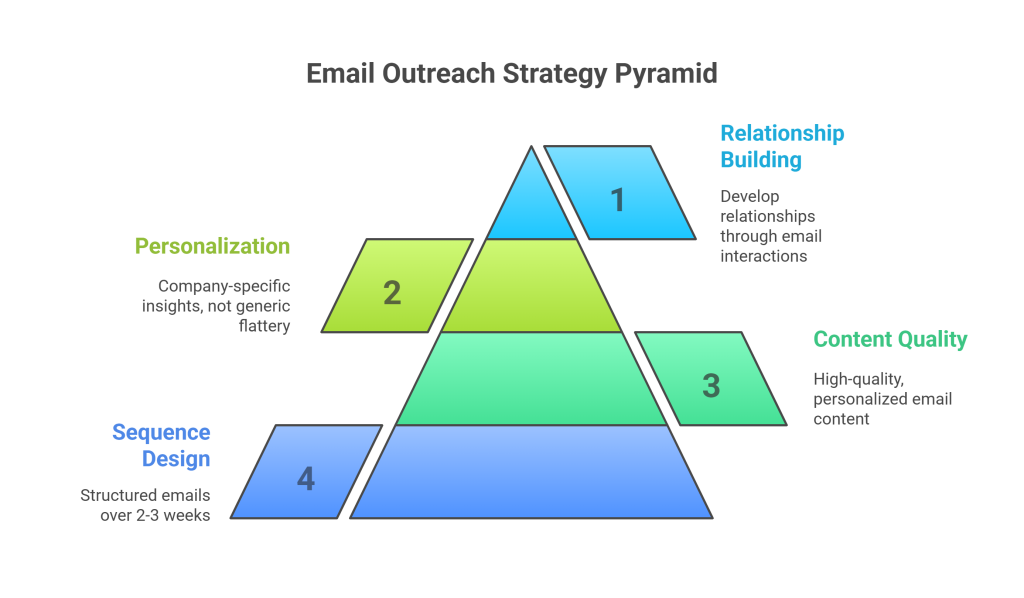
Sequence Design and Timing
Effective email outreach relies on sequences that provide value over time, with each email serving a distinct purpose. Backlinko found that three or more messages produced the best overall response rate, so a sequence of several touchpoints beats a single message. There is no fixed ideal length, so test it with your audience. Send time matters too, but the data is inconsistent: Klenty cites 1 PM to 4 PM as the best send time and itself advises reading every statistic with caution and checking it against your own campaign data.
Comprehensive outreach strategies combine educational content, social proof and specific value propositions to keep prospects interested throughout the sequence.
Content Quality and Personalization
The written nature of email demands high-quality content, but this becomes an advantage when executed well. Researched, personalized emails show attention to detail. In the Backlinko data, personalized message bodies had a 32.7% better response rate.
Successful email campaigns avoid the common pitfalls that plague most outreach efforts. Personalization strategies that scale effectively focus on company-specific insights rather than generic flattery, creating genuine relevance that captures prospect attention.
Legal Framework in Germany
For email, even B2B has no exception: advertising by email needs the addressee’s prior express consent under section 7(2) no. 2 UWG. The IHK Munich puts it briefly: “Es gibt keine B2B-Ausnahme” (there is no B2B exception). GDPR legitimate interest under Art. 6(1)(f) (Art. 6 GDPR, Recital 47) covers data processing only and does not replace the consent required under unfair competition law. If you did not collect contact data from the person directly, Art. 14 GDPR also requires you to inform them, within one month at the latest and no later than the first communication.
That does not make email safer than the phone. For calls to businesses, section 7(2) no. 1 UWG requires at least presumed consent. According to the IHK Munich, it is only rarely accepted and usually requires a prior contact. Both channels are legally risky without an existing relationship, so have your approach reviewed before you start.
FAQ
What response rates can I expect from cold email vs cold calling?
Backlinko found an average response rate of 8.5% across 12 million outreach emails, and Cognism reports a 2.3% cold calling success rate for 2025. The metrics differ, so the numbers show direction, not a guaranteed gap in your market.
How much does each method cost per qualified lead?
We found no reliable, independent figure for the cost per qualified lead of either method. Calculate with your own staff, tool and data costs and your rate from contact to booked meeting.
Which approach scales better for growing sales teams?
Email sequences run in parallel with tools, while a call ties up one person. Scale is limited by deliverability (Google requires SPF, DKIM, DMARC and a spam rate below 0.30% for bulk senders) and by consent.
Do buyers actually prefer email over phone outreach?
Many value asynchronous communication that fits their schedule, but not all: Cognism reports that 49% of buyers prefer to be contacted by phone first. Test both channels with your audience.
Is cold email to businesses allowed in Germany?
Only with prior express consent. Section 7(2) no. 2 UWG makes no exception for business customers, and the GDPR (Art. 14) adds information duties. Design campaigns around consent or have the individual case reviewed legally.